Showing posts with label 16th century. Show all posts

Thursday, January 2, 2014

A little corner of London, microcosm for the world

NW Zadie Smith
One of my goals for 2014 is to explore new and different ways of writing reviews.  While I enjoy my long format because it makes it easy for me to share my thoughts and talk about the points that mattered most to me, I also sometimes dread writing those reviews, particularly for books like this one.  So I am trying to find ways to share what really impacted me about this book without doing a full-on 8 paragraph review of it.  Please let me know what you think!

NW, by Zadie Smith

Quotes that stood out to me:
"-and need to see a proper doctor.  A clinic.  We keep trying.  And nothing.  You're thirty-five this year."
Said Frenchly:  nussing.  Once they were the same age.  Now Leah is aging in dog years.  Her thirty-five is seven times his, and seven times more important, so important he has to keep reminding her of the numbers, in case she forgets.

When being bullied Keisha Blake found it useful to remember that if you read the relevant literature or watched the pertinent movies you soon found that being bullied was practically a sign of a superior personality, and the greater the intensity of the bullying the more likely it was to be avenged at the other end of life, when qualities of the kind Keisha Blake possessed - cleverness, will-to-power - became "their own reward," and this remained true even if the people in the literature and the movies looked nothing like you, came from a different socio-economic and historical universe, and - had they ever met you - would very likely have enslaved you or, at best, bullied you precisely the same extent as Lorna Mackenzie who had a problem with the way you acted like you were better than everyone else.

"You're difficult for her to understand."
"Why?  What's difficult about me?"
"You have your work.  You have Frank.  You've got all these friends.  You're getting to be so successful.  You're never lonely."

Natalie tried to picture the woman being described.

Natalie Blake had completely forgotten what it was like to be poor.  It was a language she'd stopped being able to speak, or even to understand.


Other books that came to mind while reading this one:

Wolf Hall because of the sometimes difficult to follow narrative style

Americanah because of the way Smith used multiple POVs to make a point about how the person I see myself as being can be very different than the person other people see

Tangential events/moments/memories that resonated more deeply because of this book:

Chicago's mindless violence and what a waste it is
Winning the genetic lottery
The Haves and Have-Nots

Wednesday, October 30, 2013

Spies Who Fly!

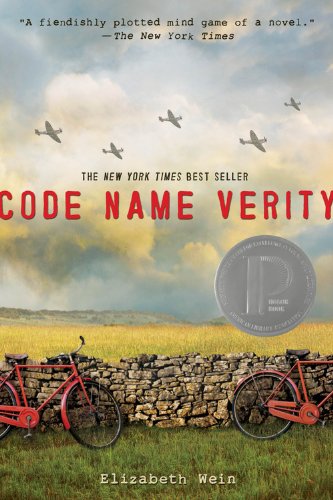
Code Name Verity
If you have not seen a ridiculous number of reviews of Code Name Verity on your book blog radar, then please let me know.  We must follow completely different bloggers and it would be fun to find some new people that read totally different books!

Code Name Verity takes place during World War II.  It begins with a young woman in a Nazi prison forced to tell her story to a Gestapo by writing every day about her experiences in the war to date.  We learn more and more of Julie's story as the book continues.

Two young women, Julie and Maddie, meet during a very stressful situation and become the best of friends.  Maddie is a fantastic pilot, and Julie is recruited to be a spy.  And, now, Maddie is lost and Julie is being tortured in prison, forced to tell all her secrets to the enemy.

And then you get to Part Two of the book and things get shaken up.

There were many things about this book that I really liked.  Most of all, I appreciated the friendship between Maddie and Julie.  It may just be me and the books I read, but it's not often that you see a friendship at the center of a book targeted to teens and adults any more.  I loved that this book was about two young women finding each other and becoming fast friends and then doing everything they could to keep each other as safe, warm, and happy as possible.

Also, I liked learning about women in the war effort.  Granted, there was not that much information provided about this, but just having a book set in which the women are the heroes and are able to defy odds that men are also up against - this made me happy.

However, I did not love this book.  Possibly this is due to high expectations going in, but most likely it is due to the inordinate amount of time spent describing types of planes and how to fix planes and what it's like to fly planes and the words you'd use to help someone land a plane.  I also found the narrative style very fragmented.  Maybe I was just too distracted a reader but I had trouble with characters who would pop up in one place and then not show up again and then finally come back and be different.  Or some big event would happen, like bringing a Nazi pilot down to land in Britain, but we'd not know what happened after that.  Or Julie becoming a spy, but us not really knowing how or when that happened.  There were a lot of holes.  And I get it, when you are confessing to the Gestapo, you are not going to share all these intimate details, but Julie does share a lot of details on some things and then not on others, so I found it a little frustrating.

Thursday, October 24, 2013

The unlikely life of Aminata Diallo

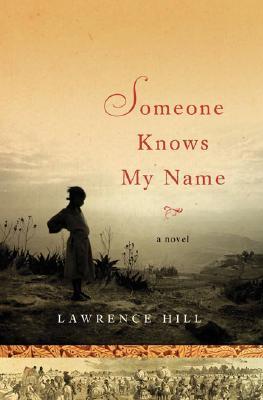
Someone Knows my Name
Lawrence Hill's Someone Knows My Name is also known by the (frankly more arresting though un-PC) title of The Book of Negroes.  The Publishers Weekly summary is pretty good, so I'll just use theirs below:
Stunning, wrenching and inspiring, the fourth novel by Canadian novelist Hill (Any Known Blood) spans the life of Aminata Diallo, born in Bayo, West Africa, in 1745. The novel opens in 1802, as Aminata is wooed in London to the cause of British abolitionists, and begins reflecting on her life. Kidnapped at the age of 11 by British slavers, Aminata survives the Middle Passage and is reunited in South Carolina with Chekura, a boy from a village near hers. Her story gets entwined with his, and with those of her owners: nasty indigo producer Robinson Appleby and, later, Jewish duty inspector Solomon Lindo. During her long life of struggle, she does what she can to free herself and others from slavery, including learning to read and teaching others to, and befriending anyone who can help her, black or white. Hill handles the pacing and tension masterfully, particularly during the beginnings of the American revolution, when the British promise to free Blacks who fight for the British: Aminata's related, eventful travels to Nova Scotia and Sierra Leone follow. In depicting a woman who survives history's most trying conditions through force of intelligence and personality, Hill's book is a harrowing, breathtaking tour de force.
I purchased this book earlier this year in paperback, but I read it in the audiobook version.  I enjoyed the audiobook, but I don't know that the narrator was so great that I would recommend the audiobook version over the physical or digital version.  The book is worth reading, period, in whatever form.  But I don't think hearing the book was any better than reading it would have been.

That said, though, there's a lot happening in this book that is amazing whichever way you experience it, and if audiobook is the only way you can read it, well... then you should read it as an audiobook.

Thursday, July 18, 2013

The Goose Girl, adapted for awesome

Thorn Intisar Khanani
I considered leaving the cover completely off this review because it makes the book look like it's about some sort of pageant queen with the power to create castles and unicorns out of a field of wildflowers, and THAT IS NOT AT ALL WHAT THE BOOK IS ABOUT.  So, please ignore the book cover and focus on my words because this story was so, so good!

I bought the book after Tanita reviewed it for #Diversiverse last year but only got around to reading it while on vacation.  Shame on me.  It was completely absorbing and I strained my eyes reading it on a very dark and bumpy bus ride.  It was worth it!  Also, it's only $3.99 on Kindle, and if you buy the e-book, you don't have to look at the cover, so there is zero downside.

Thorn is a retelling of The Goose Girl from the Brothers Grimm, though after reading Thorn, I realized I am not at all familiar with the story of The Goose Girl.  So I don't know how true this story is to the original, but it's true to itself and that's what matters.

Thursday, March 21, 2013

Sometimes Normal Life is Worthy of Novelization

I read my first Barbara Pym in 2010Excellent Women is one of those books that had a huge impact on me when I read it, so much so that I was a bit worried about reading her again.  But Open Road Media is releasing several of Pym's books on e-book, and A Glass of Blessings just sounded so good that I went for it.

Wilmet Forsyth lives with her husband and mother-in-law in a fashionable part of London.  Wilmet doesn't have a job, which is fine because she doesn't want one.  She also doesn't have children, which is fine because she doesn't want them.  However, sometimes she wishes she had either a job or children so that people would not wonder how she fills her life.

Wilmet and her husband fell in love in Italy during the war and married, but lately, Wilmet doesn't feel that they have much in common.  When her best friend's husband and brother both start displaying interest in her, she gets excited in a way she hasn't for quite a while and starts going on excursions without her husband's knowledge.  She also becomes more and more involved in her church and gets to know the many people there over the course of the story.

Wednesday, December 26, 2012

Musings: Bitterblue

Bitterblue
Bitterblue is one of those books I impulsively picked up from the library while browsing the shelves.  I liked the companion novels Graceling and Fire, but for some reason, I didn't greatly anticipate Bitterblue's release - perhaps because I enjoyed the two others, but didn't love them and feel bereft when I finished them because the stories were over.

And that's basically how I felt about this novel, too.  I don't remember much about either Graceling or Fire, unfortunately, but in re-reading my reviews, it looks like I enjoyed the plots but wasn't very attached to the characters.  And that's what happened for Bitterblue, too.  While this novel tackles much more difficult subject matter than the previous two and is more subtle in its approach on how to deal with it, for me it still lacked a character that stood out enough for me to fall in love with.

Tuesday, November 13, 2012

Musings: The Third Miss Symons

The Third Miss Symons is a remarkably well-written novella about a remarkably unlikeable Victorian woman.  It's a story that warns of the danger of an idle mind and a bad temper.  Hop on over to the Project Gutenberg Project site to see what I thought of it.

Thursday, September 6, 2012

Musings: An Unsuitable Job for a Woman

An Unsuitable Job for a Woman
My friend lent me this book when I expressed interest in reading more PD James.  Then we read Death Comes to Pemberley together and I was unimpressed with James.  But she urged me to try again, as did many of you.  And so I picked up An Unsuitable Job for a Woman almost entirely for its title.  It's pretty awesome, right?  And entirely up my alley.

An Unsuitable Job for a Woman is a mystery novel that centers on Cordelia Gray, a private eye who inherits an agency after her partner commits suicide (this is not a spoiler - it happens on page 1).  She gets her first job soon after - Sir Robert Callander asks her to investigate the suicide of his son, who hanged himself very suddenly after dropping out of Cambridge and becoming a gardener.  Cordelia takes the job and it doesn't take her very long to realize that she isn't investigating a suicide, but a murder.

Cordelia Gray is the protagonist of only two books by PD James - according to a review on GoodReads, James was so appalled by the screen version of her girl detective that she stopped writing books about her.  I think this is more of a loss to James and to the reading community than to the television industry, but such is life.  Gray is a character that readers want to know more about.  Her father was an anarchist, but she went to school in a convent.  She's very young - just about 22 - but has depended only on herself for many years.  She doesn't get close to other people easily, and it doesn't seem like she has many friends at all.  But she's smart and tough and there is so much that James could have done with her.

I didn't fall in love with this book.  The mystery wasn't very compelling to me as when you start a mystery novel, it's fairly obvious that the suicide is really a murder.  And the other characters in this novel weren't particularly interesting.  What was interesting was the way Cordelia met the censure of the older generation and the ennui of her own generation.  I liked that Gray stood up for herself, however subtly it was done.  For example, several people in the book tell her that being a private eye is "an unsuitable job for a woman," and she just keeps going with it.  But it's hard to understand what drives Cordelia.  What makes her tick?  I don't feel like I ever found that out.  She grew up to be tough, and that was a hard exterior to break through, even as a reader.  But there was so much potential!  I wish there was more to dig through.

Honestly, my reaction to this book was pretty "meh."  It was interesting in parts, but uninteresting in others.  And while I liked the main character, I thought that the story dragged on far longer than it needed to.  PD James still hasn't won me over, but perhaps that's because I haven't read a Dalgliesh mystery yet.  I'll give her one more chance!

Thursday, August 2, 2012

Musings: Green Grass, Running Water

Green Grass, Running Water
I first heard about Thomas King's Green Grass, Running Water on Eva's blog.  I put it on my wish list and looked for it every time I went to a bookstore or a library, but never found it.  And then I went to the BIG library and lo and behold it was there!  And so I have finally read it, and I'm so, so glad I did because this book is really, really good.

How can I describe it to you?  There are four old men:  The Lone Ranger, Robinson Crusoe, Hawkeye, and Ishmael.  There is also Coyote.  They have all escaped from a mental institution together.  For the 37th time.  One at a time, they tell Coyote a creation story.  Coyote interrupts, and as each man tells his story, we cut across to other people's lives in the modern day- "strong, sassy women and hard-luck, heardheaded men, all searching for the middle ground between Native American tradition and the modern world."  As the story progresses, all the characters move closer and closer towards the Sun Dance at their childhood home of Blossom, which is where (drum roll, please) the climax happens.

I really didn't do the book any justice above, and so you will just have to trust me on its worthiness and add it to your wish list or TBR or Purchase Immediately pile based on your innate trust of my taste in books.

Monday, July 23, 2012

Musings: 1493 - Uncovering the New World Columbus Created

1493:  Uncovering the New World Columbus Created
I read and loved Charles C. Mann's 1491:  New Revelations of the Americas Before Columbus, so when I heard that Mann had a companion book out, I was very excited to get my hands on it.  1493 in some ways picks up where 1491 left off, except that it dramatically increases the scope of the research.  Instead of focusing on the Americas, Mann gives detailed accounts of how the Columbian Exchange impacted the entire world.  Yes, the Europeans brought disease and took tobacco, but that is just one tiny piece of a colossal whole.  As in his previous book, Mann gives us a spectacular perspective on the continuing effects of what happened- "nothing less than the forming of a single new world from the collision of two old worlds..."

Often when we are taught history, we are taught in silos.  "This is what happened in Europe at this time.  This is what they were doing in India then.  In the US, they were dealing with something totally separate."  What I most appreciated about 1493 was that Mann brought all of these histories together and made clear just how intricately they were connected.  Silver mined in South America by African slaves was minted in the Spanish empire, but 80 to 90 percent of it went to China.  These are links that textbooks rarely make, and it was amazing to see just how global the world has been for so long.  And just how completely our world changed when the Americas were discovered.

Monday, July 16, 2012

Joint Musings: The Forgotten Beasts of Eld

Forgotten Beasts of Eld
Ana from things mean a lot and I read Patricia McKillip's World Fantasy Award winner The Forgotten Beasts of Eld together some time ago.  And thank goodness I had a reading partner for this one because it was a surprisingly complex and subtle novel.  Completely different in tone from the previous McKillip I've read (and loved), Alphabet of Thorn, The Forgotten Beasts of Love is about power and the effect it can have on both the wielders of it and the victims of it.

Sybel is descended from gods, and she lives happily without any human contact for a very long time.  Her only companions are the animals that she has sought out and brought under her power.  Her goal is to find the liralen, an elusive and beautiful bird that continues to evade her.  But one night, her solitude is interrupted by Coren, a man who comes to her with a baby boy and begs her to raise the boy and keep him safe.  After a long hesitation, Sybel agrees, and this decision changes everything because the boy is not just any boy, but the heir to a kingdom.  As Sybel tries to balance her allegiance to two enemy camps, she struggles to keep her own independence and stay true to the person she wants to be.

Below is the second half of the conversation Ana and I had about this book.  Check out the first half on her blog.  It's pretty long and it's a spoiler minefield, so be warned if you plan to read this book (though we warn you below in bold letters when you are getting to the spoilers, so don't worry yet)!  But we noticed that there isn't a lot of discussion of this book on the interwebs, and it's one that really begs for detailed discussion, so we thought we'd put our thoughts down on a lot of details, for posterity.  (And when I say "our" thoughts, I mostly mean Ana's.  As you will see, she was not nearly as flummoxed by the book as I was and made the book so much clearer to me!)  Enjoy!

Monday, July 2, 2012

Musings: In the Garden of Iden

In the Garden of Iden
I fell a little bit in love with Kage Baker when I read The Anvil of the World.  But Baker is much more known for her science fiction than for her fantasy (though I admit I am not sure why), and I knew I had to try her time travel series set around a mysterious organization called The Company.  I finally picked up In the Garden of Iden from my shelf recently and delved into the first of the series that revolves around the beautiful and rebellious time traveler Mendoza and her work as an Immortal for The Company.

In this first outing, we meet a very young Mendoza (first name unknown) as she is sold by her mother to a group of witches and then taken to prison during the Spanish Inquisition.  There, she meets a stranger who offers her a way out of life imprisonment and torture- she can become immortal like him.  Obviously, the young child agrees, and she is whisked away to a school in Australia where she undergoes all sorts of surgeries, learns extraordinary details about every era of history, and graduates with a specialty in botany (because she hates people).

On her first assignment, Mendoza is sent to a pleasure garden (The Garden of Iden) in Queen Mary's England.  There she falls in love with a strong-willed Protestant, and her life, as you might imagine, changes quite drastically.

Friday, June 15, 2012

Musings: Ella Enchanted

Ella Enchanted
Probably only a few followers of my blog know this, but many years ago, I had a very intense love of Cinderella.  It's always been my favorite fairy tale.  I love everything about it.  And because of that, I am really, really against Cinderella retellings.  I have a strong (and probably borderline insane) protective feeling for the story (ok, yes, I mean the Disney version).  I just hate when people mess with the formula, particularly with these four components:

1.  The Fairy Godmother - Why get rid of this character?  She is supportive of poor Cinderella, who is forced to be a servant in her own home.  Also, it's called a fairy tale.  So leave the fairies alone.

2.  Cinderella Herself - Cinderella was a kind and sweet and intelligent and beautiful woman.  What's the deal with authors making her out to be the bad guy in some retellings?  I am not on board with this.  Not.  On.  Board.

3.  Prince Charming - His name is Charming!  He is charming!  He's also handsome and patient and good.  He is not spoiled, he is not dull, he is not a buffoon.  Is there something so wrong with being swept off your feet by a person who happens to be just as wonderful as he seems at first glance?  Don't mess with the fantasy.

4.  Cinderella and Prince Charming fall in love and live happily ever after.  With each other.  Period.

So I generally veer away from Cinderella retellings - nearly all of them mess with at least one of those key components, and that makes me very unhappy.  But everyone I know who has read Ella Enchanted loved it, and I set aside my fears and gave it a go.  And didn't look back once.  Sometimes you read a book and it's just what you need.  It's a gift, and you never forget that wonderful delight of realizing that you've found a book that speaks to you.  Ella Enchanted was that for me.

Tuesday, May 15, 2012

Musings: Bab - A Sub-Deb

I heard about Mary Roberts Rineheart from Tasha in her review of The Man in Lower Ten on the Project Gutenberg Project blog.  I immediately downloaded that book and then spent quite a long time looking for other books by Rineheart that appealed to me (she has an extensive backlist!).  I found several, but the first one I read was Bab:  A Sub-Deb.  And oh, I'm so happy I read this!  It was so funny and sweet and excellent, and I hope that I miraculously start a blogger trend of reading this book in the way that waves of bloggers have read and enjoyed 3 Men in a Boat and Daddy Long-Legs.

Bab:  A Sub-Deb is about Barbara Archibald- a beautiful, slightly ditzy, 17-year-old society miss who is quite annoyed that her "barely older" but officially "out" to society sister Leila gets all the attention (and new clothes and party invites) while Bab must suffer through boarding school for two more years before she can become a debutante.  She is, in her own words, a sub-deb, and it's a rough life.  The problem is that Bab is a very pretty girl who draws all sorts of male attention and gets into a ridiculous number of scrapes and then does her very best to get out of them without any help.  She rarely succeeds at this goal, but gosh, it's fun to watch her try.

Friday, May 4, 2012

Musings: Bring Up The Bodies

Bring Up the Bodies Hilary MantelI loved this book.  I have a massive girl crush on her and if I could have a literary dinner with some of my favorite authors, she would be on the invite list.  I love everything I've ever read by Hilary Mantel, I freely admit, and Bring Up the Bodies is no exception.  It's that book I was anticipating receiving so much that I became listless in my reading of anything else while I waited for it to arrive in the mail, knowing that it didn't really matter what I was reading, I would drop it the minute I got my hands on this one.  That's exactly what happened, and the book didn't disappoint.

Bring Up the Bodies is the second book in Hilary Mantel's trilogy about Thomas Cromwell, following on the enormous success of her Booker Prize-winning Wolf Hall.  I loved Wolf Hall, not only because it truly humanized a man who has become more a demonic caricature of himself in the centuries since his life, but also because of Mantel's lyrical writing style.  Bring Up the Bodies is written in the same style (though she clearly has taken note of reader complaints about her use of the pronoun "he" and is much more careful here to make very clear which "he" she is referring to), and I was utterly swept up in it.  It begins, as the cover illustrates, with falconry at Wolf Hall, where King Henry VIII fatefully meets Jane Seymour and sets in motion one of the most dramatic stories in known history.  Once again, we are led by our faithful and highly skilled guide, Thomas Cromwell, through the nooks and crannies, the twists and turns, of Tudor England as Henry VIII turns his affections from Anne Boleyn to Jane Seymour.  The book spans the course of a year, and half of the book takes place over only a few weeks, but this is the climax of Thomas Cromwell's career, the point of no return.  This is when he tests his friends and makes clear his enemies in a way that will set his life on an irreversible track.

Friday, April 13, 2012

Musings: Mrs. Palfrey at the Claremont

Mrs. Palfrey at the Claremont is the first book I've ever read by the beloved-by-bloggers Elizabeth Taylor.  (No, not that Elizabeth Taylor.)  I can understand why readers adore her so much, but I think my reaction to her is similar to my reaction to Barbara Pym- I loved her for being so thoughtfully honest in her portrayal of people's everyday lives, but the portrayal itself is so painful, bringing to the front all of our tiny cruelties and unkindnesses to each other- that I cannot imagine reading books by Taylor one after the other.

Mrs. Palfrey is an elderly woman with varicose veins who "would have made a distinguished-looking man and, sometimes, wearing evening dress, looked like some famous general in drag."  She moves into the Claremont Hotel in South Kensington.  The Claremonet is open to long-term residents, with the caveat that they "are not allowed to die there."  She keeps company with an assortment of other elderly ladies (and one elderly man who enjoys telling dirty jokes) who like to talk about their extended families and all their familial accomplishments, though they rarely ever receive visitors and live very lonely lives.  Mrs. Palfrey finds herself reinventing her grandson Desmond, making him out to be a very kind and busy young man who is just too busy to visit her as often as he would like.  The real Desmond has never once even written her a letter.

One day, Mrs. Palfrey slips and falls, and a young man named Ludo makes sure she's all right.  Thus begins a rare sort of friendship, of a young man and and elderly lady finding enjoyment in each other's company.  Ludo pretends to be the larger-than-life Desmond that Mrs. Palfrey created, and in return, Mrs. Palfrey provides Ludo with some free meals and the knowledge that someone cares about him.

Monday, April 2, 2012

Musings: The Virago Book of Fairy Tales

I first heard about the Virago Book of Fairy Tales (my copy was called The Old Wives' Fairy Tale Book) from Ana in a comment on my review of Trickster.  In that review, I said that I enjoyed Trickster, but was unhappy that so many of the stories related did not portray women in a very positive light.  Ana pointed me towards Angela Carter's more women-centric book of folk tales and fairy tales, and I quickly got the book from the library to read.

And, as Ana promised, the book is much more interesting and nuanced in its portrayal of women because, well, that was a significant motivating factor in compiling the book.  The stories also come from peoples and cultures all over the world, from Native Americans to West Africans to Eskimos to Europeans, so it was really fascinating to see the different cadences and rhythms and themes that emerged from them.

Saturday, March 31, 2012

Musings: Alphabet of Thorn

Alphabet of Thorn
I've been lucky recently to read several new-to-me authors that I've really enjoyed.  Kage Baker, Christopher Fowler and now Patricia McKillip.  This makes me happy because, obviously, it is always nice to discover a book that speaks to you.  This happiness is always somewhat tempered with the, "What else is out there that I have not yet discovered, and what if I never discover it?!" panic.  But I try to ignore that panic as much as possible and focus on the good.

I have had Patricia McKillip on my shelf for a long time and never read her.  This book, Alphabet of Thorn, in particular, has been on my shelf for a while and I never bothered to pick it up.  I freely admit that this is because I really dislike the cover.  It is pretty and very ornate- continuing onto the back of the book as well- but it doesn't really draw me in (though it is amazing at depicting the story itself, now that I look at it more closely).  So I ignored the book until very recently when I felt a pull to read some traditional fantasy.  And this book was SO GOOD.  Thank goodness I got over my cover issues because the story is really fantastic.

Nepenthe is an orphan in the kingdom of Raine.  She was raised by librarians to become a very skilled translator and spends her days decoding very old texts in long-forgotten languages and translating them into her own language.  One day, she meets Bourne, a student at the Mage School, and he gives her a book written in an alphabet of thorns.  Nepenthe is immediately drawn to the ancient book and becomes obsessed with translating it, learning all about the emperor Axis and his mysterious sorceress Kane.  But the book doesn't follow any of the rules - it refers to places and conquests and people that existed long after the author and its main characters could possibly have lived.  And there are problems in Raine, too- the new, young queen Tessera is facing dissent from within her own kingdom, but a more terrifying, completely unknown threat is coming, too.  And the only warning is to "Beware the thorns."

Thursday, March 8, 2012

Musings: Diary of a Provincial Lady

Diary of a Provincial Lady
One of my favorite things about reading Diary of a Provincial Lady by E.M. Delafield was the number of references to other books that showed up in the story.  From what I can tell, the following books (many of which are now on my wish list) were referenced:

American Tragedy
High Wind in Jamaica
The Exciting Family
The Edwardians
Bulldog Drummond
Little Dorritt
The Daisy Chain
Jane Eyre
A Brass Hat in No Man's Land
Life of Sir Edward Marshall-Hall
Life of Disraeli
The Good Companions 
Elizabeth and Her German Garden

Some of those books are hard to find, particularly as authors are not always listed with the titles, but definitely on my to-read list now are High Wind in Jamaica, Bulldog Drummond and The Edwardians.

But what were my thoughts on Provincial Lady?  I don't really know.  So many people have read this book over the past couple of years in blogosphere.  The first reviewers raved about so, so then many more people had high expectations regarding it, and then they read it, too, but didn't enjoy it quite so much as the earlier reviewers.  I am in the second camp, not only because I was in the second wave of people reading this book, but also because I didn't love it the way so many before me did.

Saturday, June 4, 2011

Musings: The Firebrand (DNF)

The Firebrand
Marion Zimmer Bradley's feminist retelling of the Trojan War, The Firebrand, is oddly named for a man- Paris- and not for any of the women in the story.  The main character is Paris' twin sister, Kassandra.  At a very young age, Kassandra is called to be a virgin priestess of Apollo (unfortunately for any number of men, since she's as beautiful as her brother is handsome).  But the Mother Earth Goddess wants her, too, and Kassandra has trouble walking the line to make both Immortals happy.  Her own personal struggle is set against the backdrop of the Trojan War and the shift from a matriarchal society dominated by worship of the Earth Mother to that of a patriarchal society ruled by the gods of Olympus.

This is another one of those books I've had on my shelf forever but never felt motivated to pick up.  I finally got it down recently because I was supposed to do a buddy read with a fellow blogger.  But I got about halfway through and she told me that she couldn't participate any more, and I (quite gratefully, I admit) set the book aside.  I didn't finish reading it so please note that the below thoughts are formed by reading only about 330 pages of a 600-page book.  I have a feeling the things that bothered me in the first half, though, would continue in the second half.