Showing posts with label class. Show all posts

Thursday, May 1, 2014

The road to economic prosperity is paved with a woman's hard-earned cash

Banker to the Poor
It could just be the people I know (lots of South Asians, lots of business school graduates), but Muhammad Yunus is a big deal.  He basically invented micro-lending, a revolutionary idea that focused on lending small amounts of money to poor people.  In most economic systems, banks are there to lend large sums of money to people who can afford to spend large sums of money.  Yunus turned this system on its head, arguing that many poor people just need a little help to move up the economic ladder, and that the banking system fails them by focusing on the wealthy.  He created the Grameen Bank, a bank dedicated to the rural poor, and rural poor women in particular.  In a very, very general sense, Grameen Bank is the Wal-Mart of the banking industry - it seeks to make up in volume what other banks make in margin.

Yunus also wrote a book about himself and the process of creating the Grameen Bank, Banker to the Poor.  I was excited to read a book by someone who so disrupted one of the oldest and most "old boys' club" systems the world over by catering to those who are so often overlooked.  And reading about his process, and the work he did, was really quite inspiring.

But ... in a way ... almost too inspiring.  The book felt a bit too much like propaganda to me, rather than an honest account of what Yunus was up against.  Yunus likes to tell stories about how he stood up to the World Bank and made a lot of moral stands against corrupt government officials and greedy bankers.  In contrast, he hardly ever shares any stories about his borrowers moving up the economic ladder!  He will give us glimpses into people's lives (usually how horrible a woman's life was before she became a borrower and how happy she is now), but I could not see evidence of those borrowers moving out of poverty.  Yes, they borrowed money, often repeatedly, to build better roofs or a new cooking stove.  But did their children learn to read?  Did their daughters finish school?  Are their children set up for a better life?  Information like that was frustratingly hard to come by.

I also thought the most interesting information about the bank's workings were missing.  For example, one of the key tenets of Grameen Bank's lending system is that people have to form groups.  There are five people in each group and they decide who gets to borrow money, how it will be spent, and police the other members.  It's very complex (and quite controversial - the peer pressure can be overwhelming).  But Yunus spends hardly any time at all on describing how the bank came up with the idea of group lending and the intricacies of using peer pressure to get your desired outcome.  He just says that it took a lot of work to get to the current system, and that the system works very well.

Yunus has done so much to disrupt a system that seems stacked against the people who need it most.  He is a recipient of the Nobel Peace Prize, has all sorts of honorary degrees, stood up to a corrupt government and influenced the World Bank's lending practices.  He's done a lot of good for the world.  But his book is, I suspect, written to bring in the donations, and so comes across as a little too theatrical and David-and-Goliath than is realistic.

Monday, April 21, 2014

Oscar Wilde, Feminist

A Woman of No Importance
I think Oscar Wilde was a feminist!  Who knew?  Well, probably a lot of people, especially Jenny, but not me.

After reading a string of very depressing audiobooks, I really needed a pick-me-up.  Oscar Wilde was it!  I picked A Woman of No Importance because it was short and funny and witty and had an interesting title.  And it was a winner!

Apparently, this is not considered Wilde's best work.  I suppose that is reasonable as An Ideal Husband and The Importance of Being Earnest are quite good, but I really enjoyed A Woman of No Importance, too.  It hit on so many important themes and never once stopped being fun.  The audiobook I listened to was also excellent.  Honestly, I feel like a well-acted play on audio is a window to the golden age of radio, because the sound effects and the big casts and all that are just SO FUN to listen to.  I want to listen to more like this.

So, the play.  It is set in an English country house, and an up-and-coming young man from a middle-class background has just been offered a fantastic job as secretary to an aristocrat who is quite rich but also not a very good person.  People are pleased!  Except for the young man's mother, who does not want him to work for such a scoundrel.  And then there is the young man's lady love, who is a Puritan and just wants to make sure that if women suffer for their sins, men suffer, too.  But to be clear, everyone should suffer for wrong-doing.

You are likely to understand exactly what is going on in this book within about ten minutes (which is probably required, as the book was only about 1.5 hours long), and who cares?  It is so much fun to read and the one-liners are so excellent and the cast is so spot-on with their droll aristocratic ways and their earnest middle-class ways and their sincere American ways you can't help but love everything.

What was the BEST, though, was the way that Wilde pointed out the double standards that existed at the time.  There is, of course, the point that a man can be a complete screw-up and horrible person but people think he's da bomb diggity, anyway.  But if you're a woman and do the same thing, you are a social pariah and have to give up going out to parties and having fun and being a person.  I followed up A Woman of No Importance with Sheryl Sandberg's Lean In, and I must say, the two books have many parallels.  Basically, we all have different standards for men than women, and women suffer for that.  Men do, too, but to a lesser extent.  Certainly, the white male aristocrats suffer the least.

What I also loved about this book was the ending, though I suppose telling you why would be a spoiler  Just know, though, that it is a good one and not sappy and stupid and moralizing like many Victorian endings are.

So!  Read this!  Or better yet, watch it live or listen to it on audiobook, because that would be way better than reading stage directions, I assume.

Thursday, April 10, 2014

Caution: Read this book while sitting in front of a happy lamp

Rohinton Mistry's A Fine Balance is quite possibly the most depressing book I have ever read.  Much like the other novel I've read by him, Family Matters, it is pretty sad the whole way through, but then you get to the epilogue and realize that the rest of the book was like an episode of Full House compared to what he has in store for you in the last several pages.  That's where he ensures that you lose all hope in the future of humanity.

This is probably not a great way to introduce the book to you in a way that makes you want to read it.  And frankly, if I had known how depressing the book was before I picked it up, I am not sure I would have read it, either.  It is SUPER depressing.  It's depressing the way this winter has been depressing.  You think that you have seen enough and that someone will have mercy on you because things can't get much worse, and then you wake up and it's 20 degrees at the end of March and it's still snowing and you realize that you have worn the same eight sweaters approximately 50 times over the past six months because there are only so many clothes in your wardrobe that are warm enough to wear in sub-zero temperatures.  So you put one of those sweaters on again, and miserably go out to sweep the snow off your car so that you can drive two hours to work because ... well, what else can you do?

Rohinton Mistry is this winter.  He just does NOT give you a break.

A Fine Balance is a story that revolves around four people, mostly during the Emergency that Prime Minister Indira Gandhi declared in the 1970s.  Dina is a widow who has trouble making ends meet. She takes in a boarder, Maneck, who is from the rural mountains and has suffered a great deal of bullying at college.  She also hires an uncle and nephew team of tailors to work for her, Ishvar and Omprakash.  These two men are escaping caste violence in their village.  The story moves forward and backward, sharing each character's backstory and then coming back to the present day, often with side stories about other people that have smaller parts in the main action of the novel but have quite telling stories about the state of India during the Emergency.  One of the key components of the Emergency, both in real life and in the novel, was the horrific mass-sterilization campaign, during which many poor people were forced to get operations so that they could no longer have children.

In some ways, this book was similar to Behind the Beautiful Forevers because it made clear just how much of a razor blade the poor live on.  Life can be going along fairly well, and then one setback can completely ruin everything that you have worked towards.  And then, even worse than that, there is the horror of police brutality, government corruption, and forced sterilization.

Obviously, with all of this as the setting, there is not much that could happen in A Fine Balance to make it a happy book.  While Mistry's writing is lovely and his characters are drawn so well and truly come to life, these only help to shatter you even further as a reader when things go badly (and, I kid you not, everything goes badly).

So while I'm glad that I read this one due to all the acclaim it has received and due to the amount of time it has sat unread on my shelf, I don't think I'll be picking Mistry up again any time soon.  I need some time to recover!

Monday, January 27, 2014

#LARMonth: Review-itas

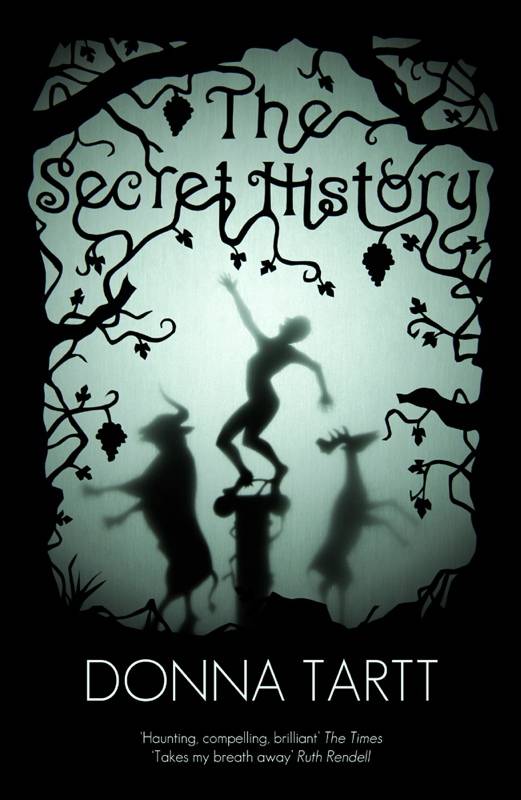
The Secret History by Donna Tartt
Donna Tartt's The Secret History is one of those sleeper hits of the reading world.  A cult classic.  I have had it on my bookshelf for years, but every time I picked it up, I was reminded of that Johnathon Jackson movie The Skulls, and would put it back down immediately.  Then Long-Awaited Reads month came up and the book came up in my library audiobook queue, and it seemed like perfect timing!

The Secret History is about a group of college students at a tiny, expensive but not elite, school in New Hampshire.  They kill one of their classmates halfway through the novel (though we know they do this act at the very beginning of the book), so there's a lot of tense, disturbing, horrible build-up to the murder and then a lot of tense, disturbing, horrible aftermath.  It's like Crime & Punishment, except with more people and no real redemption.

I admit that I didn't really care for this book.  I appreciated it on an intellectual, objective level.  Tartt is a craftswoman, building up the pressure like a volcano until even the reader is gritting her teeth and gripping the steering wheel as scenes and events are recounted.  But I found the book long and tedious, with zero likeable characters and too many Greek quotes and comments about sentence structure.  I'm glad to have finally read it, but it was a tough one for me to get through.  Definitely one of those books that I stand on the other side of the majority on.

Jane and Prudence by Barbara Pym
Jane and Prudence is another book I took down from my shelf for Long-Awaited Reads Month, though I haven't had it quite so long as The Secret History.  However, I have enjoyed the Pym novels I've read and I do want to read more and more of her, so I was glad to move from The Secret History to something a bit lighter and more fun.  Though if you have read Pym, you know that even though her novels have a very subtle and witty humor, they also bring up a lot of wonderful points about what it's like to be a woman in different life stages.  Jane and Prudence is no exception to this.

Jane is a middle-aged vicar's wife, just moved to a new small town and a bit intimidated by the people she meets there.  Her younger friend Prudence is 29 and approaching spinsterhood, though she doesn't seem too concerned about it.  Jane wants to match Prudence up with an eligible widower, but other characters have different ideas.

It's a short, easy to read book without any terrible events or huge climax, which is really just what one wants sometimes.  And, in typical Pym fashion, this is done with wonderful commentary on the small, seemingly inconsequential matters that can define a life and many of our everyday interactions:

[After Jane was served one egg and one slice of bacon, and her husband was served two of each, with the waitress explaining that "A man needs eggs!"]
Nicholas accepted his two eggs and bacon and the implication that his needs were more important than his wife's with a certain amount of complacency. 

One's married friends were too apt to assume that one had absolutely nothing to do when not at the office.  A flat with no husband didn't seem to count as a home.  

Indeed, there seemed to be little for the ladies to do but observe each other's hats, for their voices were seldom heard...their comments amounted to very little and were soon disposed of and even made to seem slightly ridiculous by the men.
 

Thursday, January 2, 2014

A little corner of London, microcosm for the world

NW Zadie Smith
One of my goals for 2014 is to explore new and different ways of writing reviews.  While I enjoy my long format because it makes it easy for me to share my thoughts and talk about the points that mattered most to me, I also sometimes dread writing those reviews, particularly for books like this one.  So I am trying to find ways to share what really impacted me about this book without doing a full-on 8 paragraph review of it.  Please let me know what you think!

NW, by Zadie Smith

Quotes that stood out to me:
"-and need to see a proper doctor.  A clinic.  We keep trying.  And nothing.  You're thirty-five this year."
Said Frenchly:  nussing.  Once they were the same age.  Now Leah is aging in dog years.  Her thirty-five is seven times his, and seven times more important, so important he has to keep reminding her of the numbers, in case she forgets.

When being bullied Keisha Blake found it useful to remember that if you read the relevant literature or watched the pertinent movies you soon found that being bullied was practically a sign of a superior personality, and the greater the intensity of the bullying the more likely it was to be avenged at the other end of life, when qualities of the kind Keisha Blake possessed - cleverness, will-to-power - became "their own reward," and this remained true even if the people in the literature and the movies looked nothing like you, came from a different socio-economic and historical universe, and - had they ever met you - would very likely have enslaved you or, at best, bullied you precisely the same extent as Lorna Mackenzie who had a problem with the way you acted like you were better than everyone else.

"You're difficult for her to understand."
"Why?  What's difficult about me?"
"You have your work.  You have Frank.  You've got all these friends.  You're getting to be so successful.  You're never lonely."

Natalie tried to picture the woman being described.

Natalie Blake had completely forgotten what it was like to be poor.  It was a language she'd stopped being able to speak, or even to understand.


Other books that came to mind while reading this one:

Wolf Hall because of the sometimes difficult to follow narrative style

Americanah because of the way Smith used multiple POVs to make a point about how the person I see myself as being can be very different than the person other people see

Tangential events/moments/memories that resonated more deeply because of this book:

Chicago's mindless violence and what a waste it is
Winning the genetic lottery
The Haves and Have-Nots

Monday, December 9, 2013

War, what is it good for?

Half of a Yellow Sun
I added Chimamanda Ngozi Adichie's Half of a Yellow Sun to my wish list immediately after finishing Americanah.  The two books are very different (and make clear that Adichie took her own warning about the danger of a single story to heart).  Half of a Yellow Sun is set in 1960s Nigeria during the terrible war for Biafran independence.  We experience it through the perspectives of some very different people - twin sisters Olanna and Kainene, Olanna's servant Ugwu, and Kainene's boyfriend Richard (who is the "white male European" POV in the story).

Adichie is my newest literary crush.  Mainly because of interviews with her like this.  I don't think she actually has a "Heroines who don't annoy me" list, but she seems like the sort of person who has an awesome list of heroines that she loved and I bet every book that those heroines are in is awesome, and I want access to that list.

I don't really know how to write a review that encompasses all that Half of a Yellow Sun is.  In some ways, there are parallels with Americanah.  There are multiple narrators in the book to ensure that we get more than one perspective on what is happening.  Those narrators are from different backgrounds and classes and genders, to ensure that we get as full a view as possible.  But the books are more dissimilar than they are similar.  Americanah is set in both Nigeria and abroad, and it's a story of two people who feel that life has a lot to offer them.  Half of a Yellow Sun is set during a truly horrifying civil war (and one that I, appallingly, didn't have even the vaguest notion of before reading this book) and it is difficult to approach subject matter like that with anything approaching unbridled optimism.

I also felt that the characters in this book were harder to know.  They were just elusive enough that I never quite felt like I fully understood them.  They were always just beyond my grasp.  The only one who felt fairly easy to understand was Richard, the British ex-pat, and I think that is only because he was so very transparent in his feelings about everything (or so he seemed to me - I may have missed a few layers).  But while it was hard for me to know everyone well, everything I do know about them felt so genuine.  Olanna in particular really came alive to me.  I loved that Adichie presented her as an idealist and a radical, but that her upper-class upbringing still came out sometimes when she worried about her daughter spending time with the wrong kind of people.  That is such a realistic depiction of how people struggle between who they want to be and who they are, and it rung so true for me.  I also liked learning about Ugwu's time as a soldier and all the things he did that he later looked back on in horror, and then how he felt when he saw how the war (and the soldiers especially) had ravaged his own family life.

There is so much here that is important to read and to know and to acknowledge.  It is a very heavy book, but it's also brilliant, and there are moments of redemption and kindness and happiness that really shine through the bleakness.  I highly recommend a read - Half of a Yellow Sun is not a book that you will easily forget.

Thursday, December 5, 2013

It's a jungle out there

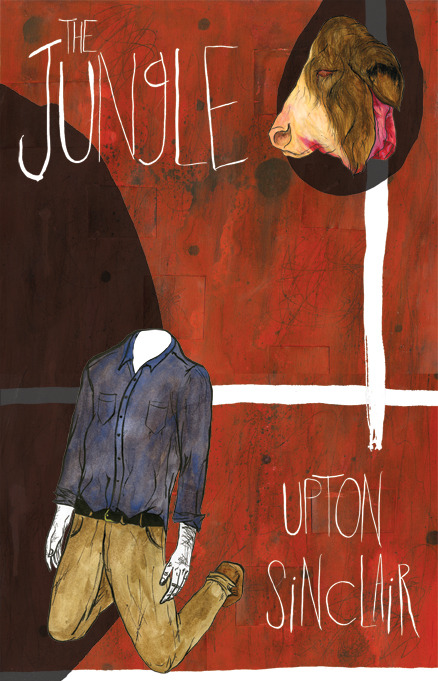
The Jungle, by Upton Sinclair, is a classic of American literature.  It's one of those books (like Animal Farm) that you feel like you know even before you read it and therefore you don't have to read it.

The Jungle takes place in Chicago, which is one of the main reasons I wanted to cross it off my list of classics to read.  It was serendipity that I read it so soon after My Year of Meats because I think My Year of Meats references The Jungle in many ways.  Both books are ostensibly about the meat industry, but they use the industry to bring much-needed attention to societal problems such as the plight of the poor or the dangers of animal hormones.

The Jungle was not a particularly entertaining read.  It was, like My Year of Meats, more of a diatribe or lecture nestled into a novel.  The Jungle was even more depressing, though, because there was NO REAL HAPPINESS in it ANYWHERE.

It centers on an immigrant man who becomes a worker in the Chicago stockyards (saying things like "I will work harder," a quote George Orwell used in Animal Farm to promote socialism) and then loses everything after he gets injured and then gets in a fight.  But luckily, there are communists!  And they save him.

It is a LONG HAUL before we get to the happy communist comrades, though.  Lots of gross meat-packing horrors, lots of time spent in jail, lots of struggling on the streets of Chicago, lots of despair and death.  It is possible that the writing was really great, but if so, it was lost on me through the grind of depressing events.  It was never-ending.

That said, I am glad that I read The Jungle.  Not only because it made me feel better about my own life, but because it also was such an important book in American history.  An important law about meat purity was passed after President Roosevelt read the book (hopefully the industry still follows that law, though there are probably many more that are worthy of being passed now).  So reading The Jungle made me realize that books really can have a huge impact on the world and create positive momentum (even when they are so depressing).  So - yay!

Thursday, October 10, 2013

A man's journey up the Indian social ladder

The white tiger
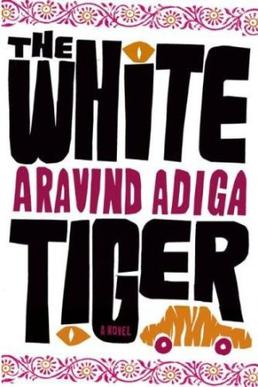
The White Tiger, by Aravind Adiga, has been vaguely on my radar as a book to read since it won the Booker Prize in 2008, mostly because it's by an Indian author and partly set in Bangalore, the city that my parents are from.  It's quite polarizing - people seem to either love it and think that it really speaks to the corruption that is ingrained in every level of Indian life, or hate it and think that it is far too extreme and depressing.

It is narrated by a man whose name changes with his social class.  First, he is called Munna by his family.  Not a real name, but a description of what he is to them.  His first teacher names him  Balram, a name he uses for much of his life.  And then someone calls him The White Tiger, and then he finally chooses a name for himself.  Most of the story takes place while Balram is a driver for a very wealthy Indian family that moves to Delhi.  There, Balram is exposed to the corruption at every level of society, from the poor all the way up through the highest levels of government.  And he decides that, in this game of winners and losers, he is going to be a winner.

This is most clearly related in two similar but contrasting events, both of which involve fatal car accidents.  But in the first, Balram is poor and so he is helpless to do anything against people who have far more money.  In the second, Balram is not poor and you can see how he has morphed into someone that he previously would have despised.  And, therefore, could easily become a target for someone who resembled the old him.

The circular story of:  man is victim, man plots revenge, man becomes corrupt, man becomes target is not a new one.  It chronicles the rise and fall of many individuals.  What made this story work for me was the narrator.  Balram is larger-than-life, filling every bit of the page and then settling into your life.  You can easily imagine him sitting back in a leather chair, holding a cup of chai, telling you his story in a very self-satisfied manner.  Balram is one of those Indians who went from being victimized to victimizing others, and he is quite happy with his progress.  I read this one on audiobook, and it was truly fantastic.  I don't know if I would have enjoyed the story so much in written form because it is really quite disheartening.  There are not many characters at all for whom you would feel sympathy.  There are not many bright lights in a miasma of corruption.  It's not a happy book.  But really, most books that look at life in India are not very happy because there are so many things in India to expose in the hopes that talking about it will embarrass people enough to try and change it.  Like so.

Definitely a great book to read if you want to understand more about India's social classes and how they interact.  And if you like a really great narrator!

Thursday, October 3, 2013

Love on a schoolbus

Eleanor & Park
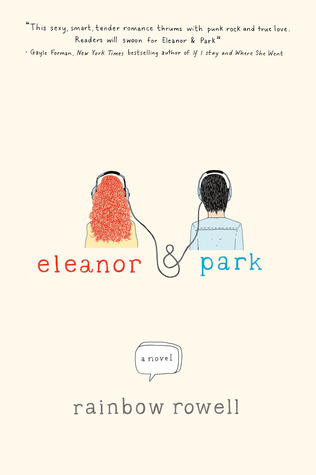
Blogosphere loves Eleanor & Park.  I am not sure how it became THE It book of the late summer (there are so many "It" books during a year!), but now that I have read it, I can understand why so many bloggers love it.

As a side note, I am a little concerned with the 1980s becoming such a popular period with authors these days.  Is this considered historical fiction?  I hope not, as I am a child of the 80s.  I feel like the 80s are popular because it's just before the huge influx of technology that hit all of us like a bus (see Ready Player One), and so people could have real conversations in person and not just via text message all the time.  I think this is fine, though I dread the day when people become reminiscent about the "good old days" of the 1980s and then 80s fashion comes back and then we'll all look ridiculous again.

Anyway, back to the book.

Eleanor & Park is about two teenagers in Nebraska.  Eleanor is the chubby red-headed poor girl who is new to school (kind of like Molly Ringwald, except not quite so cute), and Park is the half-Korean guy at the fringe of the cool crowd just trying to fly under the radar.  They meet on a school bus, a la Forrest and Jenny, and slowly start up conversation, realize they have a lot in common, and then fall head over heels for each other.

I admit that a lot of the scenes in this book in which Eleanor and Park tell each other how much they love each other made me roll my eyes.  I wonder if this is because I listened to Eleanor & Park on audiobook and it's hard not to roll your eyes when you hear things like, "I don't like you, I need you." Those are the sorts of words that people say to each other out of hearing of everyone else, not broadcasted in my car on my way to work.  So, while I think the audiobook was fantastic, I do think that audiobook in general is not a great way to experience scenes where teenagers get gooey-eyed for each other.  But luckily, there is so much more to Eleanor & Park than gooey-eyed love talk.  And that's what made this book really good.

Monday, March 11, 2013

Memoirs of an Indian Princess - No, Not the Pocahontas Kind

A Princess Remembers
Gayatri Devi, the late Maharani of Jaipur, is remembered very fondly by Indians.  She lived through some of the most exciting times of Indian history - born into the privilege of Indian royalty under the Raj, grew up in the Roaring 20s and 30s and married one of the most popular and wealthy Indian kings, lived through WWII, witnessed Indian independence and then became a politician to stand for her beliefs.  She died just a few years ago, 90 years old.

Oh, and she was absolutely beautiful, too.

Gayatri was famous even before she wrote her memoirs because she was such a public figure.  But writing her memoirs didn't hurt, especially with a title such as A Princess Remembers.

I visited the Maharajah exhibit at the Field Museum last month and it really motivated me to read this book.  So much of Indian history is wrapped up in the way the British handled the Indian ruling class - point proven, the Maharajah exhibit was presented by the Victoria & Albert Museum in London, not by any museum in India.  And I wanted to learn more about someone who had lived through it all.

Monday, February 18, 2013

Star-Crossed Lovers in Togas Risk it All

The Course of Honor
Last year, I finished the Marcus Didius Falco mystery series set in Ancient Rome.  While the series had run its course, I was sad to say goodbye to some of my favorite literary friends.  It was only recently that I remembered I owned another book by Lindsey Davis, her first book on life in Rome in the first century AD.

The Course of Honor begins with Caenis, a slave to the imperial family, meeting Titus Flavius Vespasian, a member of the middle-class who hopes to make a name for himself first in the army and then in politics.  The two feel an instant attraction for each other, but Vespasian is off to war.  When he returns, he immediately seeks Caenis out and the two become lovers, though they know that they can never really be together.  Vespasian is not allowed to marry a slave, and even if he were, he needs to marry someone who will give him some status.  The story follows Caenis through her life, and the small interactions she has with Vespasian until much later, when their lives intertwine again.

It was difficult for me to get into this book.  It begins very abruptly and continues abruptly the whole way through.  It was the first book Davis ever wrote, I think, and it's clear her style has changed over the years.  I just felt very disengaged from the two main characters.  It was as though I was watching a movie but the lens was always in panoramic mode to give a sense of the grandiosity, and I never got to get close in to see the details.  Caenis is untouchable throughout.  She is prickly and hard and difficult to know.  Vespasian is easier to know, but we never get in his head, either, and he spends large chunks of the book mostly out of the picture.

While it's easy to appreciate a great and enduring love story, it's harder to believe it when the two people barely interact, spend decades apart, and even when they're together, you don't get a full sense of how they interact with each other.  And while I think Caenis lived a fascinating life, going from slave girl to secretary to freedwoman and not only getting along but thriving, I never understood quite how she did it.  The feminist in me wanted to know so much more about that, too.

It's hard not to compare this book to the Falco series, in which you get to know all the characters so well and live for the comic and sentimental scenes that show them playing off each other.  This book just didn't work for me that way - I felt disconnected from the characters and didn't see nearly as much of the trademark wry humor for which Davis is known.  Nonetheless, I'm glad I finally read The Course of Honor, if only to mark it off my TBR list - it's been waiting patiently for me since 2007!

Thursday, February 14, 2013

The Good Old Days of Country Homes and Come-Out Balls

The Decline and Fall of the British Aristocracy
I suppose I should start this post by admitting up-front that I did some serious scanning (as opposed to in-depth reading) of The Decline and Fall of the British Aristocracy, by David Cannadine.  I was expecting social history, with a lot of quotations about the sad lack of polo matches and elaborate picnics and the horrors of death taxes.  What I got was a lot of charts (a lot of charts), long lists of names, and something that resembled a PhD thesis much more than a social history.

That's not to say this book isn't full of interesting facts.  It is.  But it's also full of a lot of other things that I didn't find interesting.  The subject matter is pretty well summed up in the title of the book - Cannadine writes about how the British upper-class fell from the very heights of its power to becoming pretty much like everyone else.

I've had this book on my shelf for a long time; those of you who have read this blog for a while know that I am obsessed with British history.  The impetus to read it, though, came after reading Sarah Waters' The Little Stranger, which revolves around the decline of a family and the grand country estate in which they live.  I wanted to understand more of the context around the situation.

Monday, December 10, 2012

Musings: Dodger

Dodger Terry Pratchett
Terry Pratchett's Dodger is set in Victorian era London and populated by many notables of that period - Charles Dickens, Sweeney Todd, Sir Robert Peel, and a few more names that will jog your memory.  The main character, though, is the Dodger of the title, a happy-go-lucky, street savvy teenager who makes his living by finding coins in the sewers.  Dodger has a chivalrous streak; one night, he sees a woman being beaten by thugs and saves her life.  And then spends most of the book trying to figure out who did it and how he can keep her safe.

 Dodger is very kind person - that's clear from the very beginning and it's one of the most simple reasons I love Terry Pratchett so much as an author.  All of his main characters are very nice and clever and practical.  This may seem like a small thing, but I don't know that it is - there are a lot of authors who write a few nice characters, but not many who write so many consistently nice characters as Terry Pratchett does.  Sure, that may lead to very black and white renditions of good vs. evil, but I don't think that is in any way a negative with Pratchett.  He brings to light so many OTHER things that you probably don't think of very regularly that the whole good vs. bad thing kind of takes a back seat.

Friday, November 2, 2012

Musings: Behind the Beautiful Forevers

Behind the Beautiful Forevers
Katherine Boo's Behind the Beautiful Forevers chronicles life in Annawadi, one of Mumbai's slums situated close to the airport and all the five-star hotels that surround it.  She follows men and women of different ages, religions, beliefs, and goals to present a very nuanced and complicated story.

I said in my review of A Suitable Boy that I loved the book because it showed both the beauty and the corruption that co-exist in India.  Boo's book does the same, but focuses on a much lower class of society.  While Seth focused on the slow sunset of the Raj's ruling class, Boo tells her story (non-fiction, by the way) by focusing on people that are on the cusp of living in the middle class.  They are so close to stability, if only.  If only luck goes their way, the government officials don't ask for too much money, the police don't take away their livelihoods, and their neighbors don't turn them in on trumped-up charges born of jealousy and spite.