Showing posts with label historical fiction. Show all posts

Monday, December 19, 2016

Yaa Gyasi's Homegoing

Like many of the books I review, I first heard about Yaa Gyasi's Homegoing in the New York Times The Warmth of Other Suns is very high on my list of books to conquer in 2017) gave it an excellent review.  When I saw it in a local independent bookstore, I bought it.  This is actually quite rare for me these days; I don't buy books any more as I get most of my books from the library.  But sometimes, I'm willing to splurge on a hardcover book that I have never read before.  I did that for Homegoing, and I'm so glad I did.  The book will be staying on my keeper shelf.
book review.  Isabel Wilkerson (whose book

Yaa Gyasi's novel is about two sides of a family, completely unknown to each other.  Effia, a beautiful girl growing up in what is now Ghana, and her descendants mostly stay in Ghana.  Esi, Effia's unknown half-sister, is sold into slavery and her descendants live in America.  Both sisters and their families are involved in and impacted by the slave trade.  Gyasi follows the families through six generations, showing how much we all struggle to come to terms with our past and how other people's actions can impact our own lives.

Many stories that follow one family over several generations are hundreds of pages long or sprawl out over a long series of books.  In contrast, Gyasi contains her stories in 300 pages.  Because of this, we do not get to know each character very deeply; when we leave a character, we rarely find out what happened to him or her, we only get glimpses from the next generation.  This was very unsettling for me.  I imagine it was even more unsettling for the people whose lives were completely upended through history.  Gyasi's intent seemed more to give us a glimpse into a life, how slavery and colonialism ravaged that life, and how that individual strove to rise above it, from the late 18th century to the present day.

In America, we learn about slavery (though we don't learn about it enough, and we learn about it more in the political sense than in the emotional and individual sense).  I suspect that in Ghana, they learn about colonialism and the slave trade (though they probably don't learn enough, either).  It is rare to see both sides of the coin presented together.  Gyasi does that here to great effect.  The impacts of slavery are felt far beyond America's shores, and the impact of the "peculiar institution" continues to this day.  I loved how Gyasi brought this to life through individual lives.  She obviously did not have the space or time to discuss everything, but she alluded to quite a lot.  Mostly, about how difficult it can be to be black in America, and how haunting it is for people not to know where they come from and what family and traditions they are missing.

In her review for the New York Times, Wilkerson expresses frustration at the way Gyasi shows the African side of the family as fighting for freedom, holding true to their traditions, and enjoying a rich culture, while the American side descends into stereotypes of men who like big butts and do drugs, women who feel like they don't fit in with anyone else because they like reading.  It's a fair critique, though a lot of that might have to do with the fact that Gyasi did not give herself the luxury of spending many pages sharing the characters' stories with us.  Wilkerson wrote a book about the Great Migration that in itself is 600 pages; it would be hard to get that sort of depth and nuance from Gyasi's much shorter novel.  One could flip Wilkerson's frustration and say that Gyasi also seemed to gloss over the impact of colonialism and war on Ghana, with only brief allusions to the fight for freedom.  The scope of world history over the past 250 years would be extremely difficult to fit into one book, so Gyasi chose to allude to more things than to bring them front and center.

What I did love was the way she continued to weave the two sides of the family together, generation after generation.  Recurring dreams that occur on both sides of the Atlantic, a fear of fire and an aversion to water.  Even so loosely connected as the characters are, Gyasi makes clear that there is still a connection.  Similarly, even as each character finds a way to remove himself or herself just a little further from slavery, you can see just how much slavery still impacts their lives.  There are no tidy solutions here.  The past happened, and we must accept that it continues to change and mold the world today.

Slavery is “like a fisherman casting a net into the water. He keeps only the one or two fish that he needs to feed himself and puts the rest in the water thinking that their lives will go back to normal. No one forgets that they were once captive, even if they are now free.”

Thursday, February 18, 2016

The Saint of Cabora

Luis Alberto Urrea
The Hummingbird's Daughter has been on my watch list for probably a decade or so.  I think I first heard about it on one of the historical fiction forums in which I used to participate.  Words like lush and vivid and lyrical were used to describe it.

But, as often happens, I just never got around to reading the book.  Other books took precedence.  Finally, I saw that it was available for audiobook download at the library, so I put it on my wish list.  Even a decade after its publication, there was a wait list for the book!  I took that as a good sign.  And after hearing only the first few instances, I was an instant fan.  It's true - the words lush, vivid and lyrical are very fitting for this novel.

The Hummingbird's Daughter is about Luis Alberto Urrea's great-aunt Teresita, a woman who was said to have great healing powers and was often called a saint in Mexico.  Teresita was born to an unmarried Indian woman and raised in great poverty by an aunt who was not a kind woman.  But she always had a great healing ability, so was accepted as an apprentice by the local healer, Huila.  Eventually, her father acknowledged her as his daughter, and from there, Teresita's life went on a very different course than she ever could have expected.

One of the reasons it took me so long to read this book was because of the strong religious undertones.  There was a lot of religion (and politics) in the second half of this book, and it became a bit tiresome and repetitive.  But there was also a lot that was amazing in this book, and I would say those aspects more than made up for the religion and repetition.  One of my favorite things about Spanish literature is the magical realism.  One of my favorite things about Luis Alberto Urrea's writing is the humor.  Combining magical realism with humor is a glorious idea, and more people should do it.  But until they do, I am happy with Urrea's approach.

I listened to The Hummingbird's Daughter on audiobook.  While I really enjoyed it - the narrator was fantastic and lively - I don't know if this book is ideal for audiobook.  Particularly in the second half of the novel, there's a lot of politics and religion and jail time and other things that just don't translate quite as well on audio as they might on paper.  I was absolutely enthralled by this story for the first 75%, but I lost a bit of steam at the end.  This is possibly because the audiobook is about 19 hours long; I admit it felt like a never-ending story, especially because the magic and humor that was present at the beginning was harder to find later on.  Kind of like The Sound of Music!  Who watches the last 25% of that movie?

The Hummingbird's Daughter is wonderful for a lot of reasons.  I loved Teresita's relationships with Huila, her teacher, and Don Tomas, her father.  Having just finished Stolen Continents, I was glad to read about an era of history that was mentioned in that book.  I loved learning more about Indian customs and the way the Spanish interacted with Indian nations, the way Teresita worked with both the Spanish and Indian sides.  The humor, the friendship, everything.  It was just a little long for audio.

Thursday, January 21, 2016

Who cares if you don't understand the story when the words are pretty?

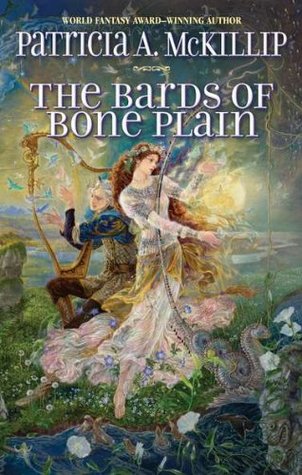
I feel like all my reviews of Patricia McKillip books are basically the same.  "Wow, what beautiful, evocative language!  But... not sure I fully grasped what happened here."

Alas, the same can be said of my experience with The Bards of Bone Plain.  I feel like I was totally jiving with this story until close to the very end, and then I was not at all sure that I knew what happened.  Did I over-simplify it?  Over-complicate it?  Totally misunderstand the symbolism?  What happened to the cauldron and the other thing, why was there so much focus just on the tower?  And how did the physics of things work?  Where was the logic, or was it all just kind of atmospheric?  Agh, so confused!

Honestly, sometimes the way McKillip goes really deep into the intangibles can be very difficult for me to follow.  But there's usually enough of the rest of the story for me to enjoy everything.  Here, there's a light steampunk aspect to the novel (very light) and a wonderfully refreshing approach to the way women go about their business and live their lives.

And seriously, McKillip can write.  Especially her descriptions of music.
Then he heard Jonah's music melding with Zoe's like silver braided with gold, like sunlight with sky, small birds flying out of his harp, and butterflies out of hers, their voices winding together, sweet, sinewy, strong as bone and old as stone.  Together, they transfixed him, spellbound in their spell, his mouth still hanging open, and all the unplayed music in him easing out of his heart with every breath.
So yes.  Definitely worth the read, especially if you have a deep connection with music. 

Monday, January 18, 2016

A girl's journey through a failed revolution

Julia Alvarez
Julia Alvarez's Before We Were Free is about Anita, a pre-teen growing up in the Dominican Republic under the Trujillo dictatorship.  Julia Alvarez herself escaped the Dominican Republic and came to the US in the 1960s; this book is her imagining of what life must have been like for the cousins she left behind.

I listened to Before We Were Free on audiobook.  At first, I thought it was going to veer a little too young for me.  But as I got deeper into the story, I became much more invested in Anita's life, her family, and how they all tried to live normal lives in the midst of chaos.

The world is in the midst of a refugee crisis.  (In addition to all our other crises.)  It's easy to get caught up in all the numbers and the logistics and the impact such an influx of people from a different culture will have on a host country.  It's easy to forget that every refugee is a person with her own history, hopes and fears.  Alvarez's book does an excellent job of showing the steps that lead to a decision to leave your home and seek out a different life for yourself.

Anita lives in a huge family compound with her extended family.  At the start of the book, she's surrounded by friends and family.  By the end, it's just her and her mother, hiding in a friend's bedroom, desperate for news of their loved ones and hoping for some chance of escaping the country. Through the story, Anita grows thoughtful, more introspective, and more aware of the situation around her, and how her own family is involved.

I wish we had gotten to know Anita's father and uncle better in this story as they were the most involved with the rebellion against Trujillo.  Even her mother seemed fairly involved, but there isn't much light shed on that for readers.  In a way, that makes sense.  Anita is 12 at the start of the book, and she is not central to the planning and execution of plans to topple a government.  We see more hints at Trujillo's reign of terror than overt descriptions.  Anita's beautiful older sister receives flowers from the president, who has an eye for pretty, very young girls, and immediately, her family finds a way for her to leave the country so that she won't disappear.  All girls are told to avoid him, and many of the men in his regime, and you can feel the undercurrent of fear in all conversations about him.

But that's not to say that this book is all about fear.  It's not.  There are many funny moments and a lot of truly heartwarming ones.  Alvarez isn't afraid to talk about big, difficult questions and issues, and the book is better for it.  

Monday, July 27, 2015

Go Set a Watchman

by Harper Lee
There has been a lot of drama and speculation around the release of Harper Lee's Go Set a Watchman.  It began with concerns around whether Harper Lee was taken advantage of; did she even want to release this book?  And then, once the book came out, it erupted into consternation that Atticus Finch was not the beloved hero we all know and love and name our kids/dogs/cats after, but was actually... well, kind of racist.

Luckily for readers, Atticus' daughter Scout is also appalled at learning that her dad's a racist.  Misery loves company!

It took a lot of effort for me to crack open the cover of Go Set a Watchman.  I really wasn't sure I wanted to read it.  I'm glad, now that I'm done, that I did read it, but I don't think I want to read it ever again.  I wouldn't say it is a very tightly-written novel.  The lack of editing is pretty obvious; a lot of conversations seem to swirl around without getting anywhere, and there is a very frustrating lack of resolution at the end of the book.

I want to believe that Harper Lee had some agency in the book's publication.  That she is aware of what's happening in the United States and thought, "Now's the time!" and thus published this book.  I want to believe that To Kill a Mockingbird was the book we all needed in the 1960s, with the white male hero swooping in with a grand (failing) effort to save the day.  And now, what we need is Go Set a Watchman, a way for us to see that ideals need to be cared for and tested for them to last long-term, and to show us just how hypocritical and ridiculous some of our arguments are.

But even if I do believe that Lee had agency in this whole situation, I just don't think she was very successful in her attempt.  There are a lot of important points made in this story, but hardly any deep discussion or introspection.  And everyone in the book is so unaware of their own privilege, it is almost laughable.

That's what ultimately frustrated me so much about this book.  It just doesn't challenge the status quo enough.  And maybe in that way, it's very much a product of the time it was written (in the 1950s and 1960s), and not a product of the time it was published.

I knew I was going to have trouble with this book as soon as I read the following:
Had she insight, could she have pierced the barriers of her highly selective, insular world, [Scout] may have discovered that all her life she had been with a visual defect which had gone unnoticed and neglected by herself and by those closest to her:  she was born color blind.
Seriously?!  The only people who ever say (and believe) they are color blind are white people, but Lee never once questioned Scout's flawed logic here.  Even later, when Scout's semi-boyfriend Hank (whom she now distrusts because he's racist) tries gently to point out her own privilege as a member of an old, wealthy and respected family in Maycomb, she is completely unwilling to accept it.

"Hank.  That is untrue and you know it.  It's unfair and it's ungenerous, but more than anything in this world it's just not true... you've got some kind of complex."
This story could have been so much stronger if later, Scout considered her own biases.  For example, after taking her high moral ground as "color blind," she goes to visit her nanny, Calpurnia, whose grandson is going to jail for manslaughter (great timing, Scout).  While there, she never once considers the fact that maybe she is not quite as color blind as she thinks she is, or that maybe it's easy to be blind to color when you are in a place of privilege.  Similarly, she never thinks about privilege as someone from a very wealthy Maycomb family.  She just assumes that everyone else is wrong and assumes that her kicking and screaming is evidence of her being a better person than they are.

Most people focus on Atticus' fall from grace in this book, and he does say some vile, miserable things that were very hard to stomach.  But Scout was a moral compass and strong character in To Kill a Mockingbird, too, and one that was far more approachable and real than Atticus probably was.  And so her fall from grace was even harder for me.  She says she's color blind but she uses the same ridiculous story about the federal government encroaching on "states' rights" that people have been using from the days of slavery to the days of civil rights to today.  And goes on to say, "Well, it seemed to me that to meet the real needs of a small portion of the population, the Court set up something horrible that could - that could affect the vast majority of folks.  Adversely, that is."

But she's not racist.  She didn't care that it was black people who were the small portion of the population the Court "set up something horrible" for.  She would have felt the same way no matter which tiny population came barging into the schools, adversely affecting the lives of everyone else already there.

Can you see why I was so frustrated?

Honestly, Go Set a Watchman felt very much like a long-winded internal monologue without any resolution.  All that happened was that Scout realized her dad wasn't perfect (and yet had no such similar epiphany about herself), but that she loved him, anyway, for teaching her how to make up her own mind.  And that was that.

And it was just not even close to enough.

Monday, February 16, 2015

A Septuagenarian Crime-Solving Boss in Communist Laos

The Coroner's Lunch, by Colin Cotterill
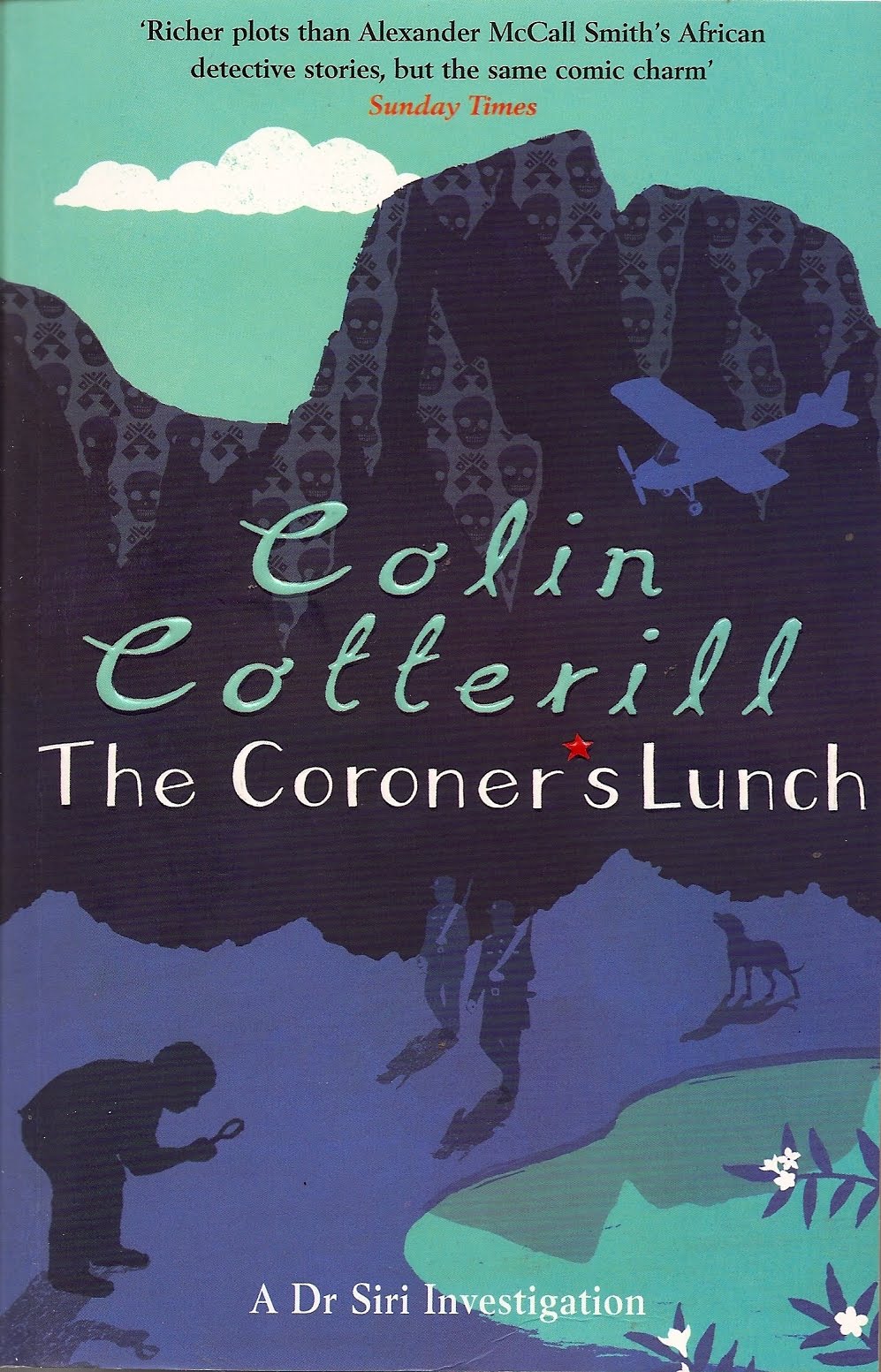
The Coroner's Lunch, by Colin Cotterill, is one of those books that makes me feel better about my TBR pile.  I've had it for a few years now and only just got around to reading it, mainly because I felt guilty at hardly reading anything from my own shelves in 2014.  But it waited patiently for me to finally get around to it, and then it validated the space it takes up on my shelf by being just fantastic.  Hooray!

The Coroner's Lunch introduces us to Dr. Siri, a 72-year-old coroner in Laos around 1970, just as the country adjusts to Communist rule.  As coroner, Siri must write cause of death for many cadavers, and some of the people who come to him do not seem to have died natural deaths.  Even when he is heavily advised against doing so, Siri investigates those deaths.  Sometimes he is helped along by the spirit world; though he is a very logical and pragmatic man, Dr. Siri often sees the spirits of the dead, and they will often guide his research and methods.

I was a little skeptical when I first encountered the spirits in The Coroner's Lunch, mostly because I didn't really like a somewhat similar theme in Maisie Dobbs.  But it was very believable here and works seamlessly into the story as a whole.  Dr. Siri has a lot of demons and guilt, and in many ways, the spirits are just manifestations of those occurrences in his past.  But in other ways, the spirit world is alive and well and a very strong theme in this story, so if that puts you off, you may want to steer clear.  For my part, I loved the angle that brought to this book, especially when weighed against Siri's own skepticism.  It added a new, unique dimension to the whole thing.

I also really appreciated the setting.  I don't know of many books set in Laos (do you?).  I liked that it was set in the 1970s, just after the Communist revolution as the country was on the cusp of modernity but still quite rural.  For example, Siri first used a telephone at age 72.  But he also goes to a rural area and sees massive deforestation, so clearly the modern world, with its benefits and horrors, hasn't left Laos behind.  The secondary characters are all wonderful, too.  I particularly liked Thuy, Dr. Siri's very capable female assistant who also enjoys reading comic books.

And Siri himself is absolutely charming.  I really enjoy books with older protagonists, and Dr. Siri is like a Miss Marple who has decided that she doesn't care who she pisses off, she's just going to go do her thing and be a boss.  To clarify, Miss Marple totally IS a boss, but she hides it very well behind her politeness and gentle kindness.  Dr. Siri, like the honey badger, doesn't care who he offends because he's old and tired and just wants to solve crime and get on with it.  He's fantastic.

The author of the Dr. Siri series is Colin Cotterill, a British expat living in Southeast Asia.  I suspect Cotterill has the dry sense of humor the Brits are famous for, and he has infused Dr. Siri with that humor as well (though maybe the Lao are more witty and dry than I give them credit for - I don't know much about their humor).  In my head, I imagined Dr. Siri to be very similar to Bill Nighy in Worricker, except not British.  This was probably helped along by the audiobook narrator, Clive Chafer, who was absolutely excellent but extremely English.

I thoroughly enjoyed this novel, and I'm so glad that someone (I don't remember who it was!) recommended it to me in a comment on this blog or in response to a comment I made elsewhere.  This is exactly the sort of mystery I love, that deals with not just the mystery at hand, but with so many other things as well, with characters with whom I can't wait to spend more time. 

Monday, February 2, 2015

Can Hindu epics be feminized? (My opinion - no)

The Palace of Illusions, by Chitra Banerjee Divakumari
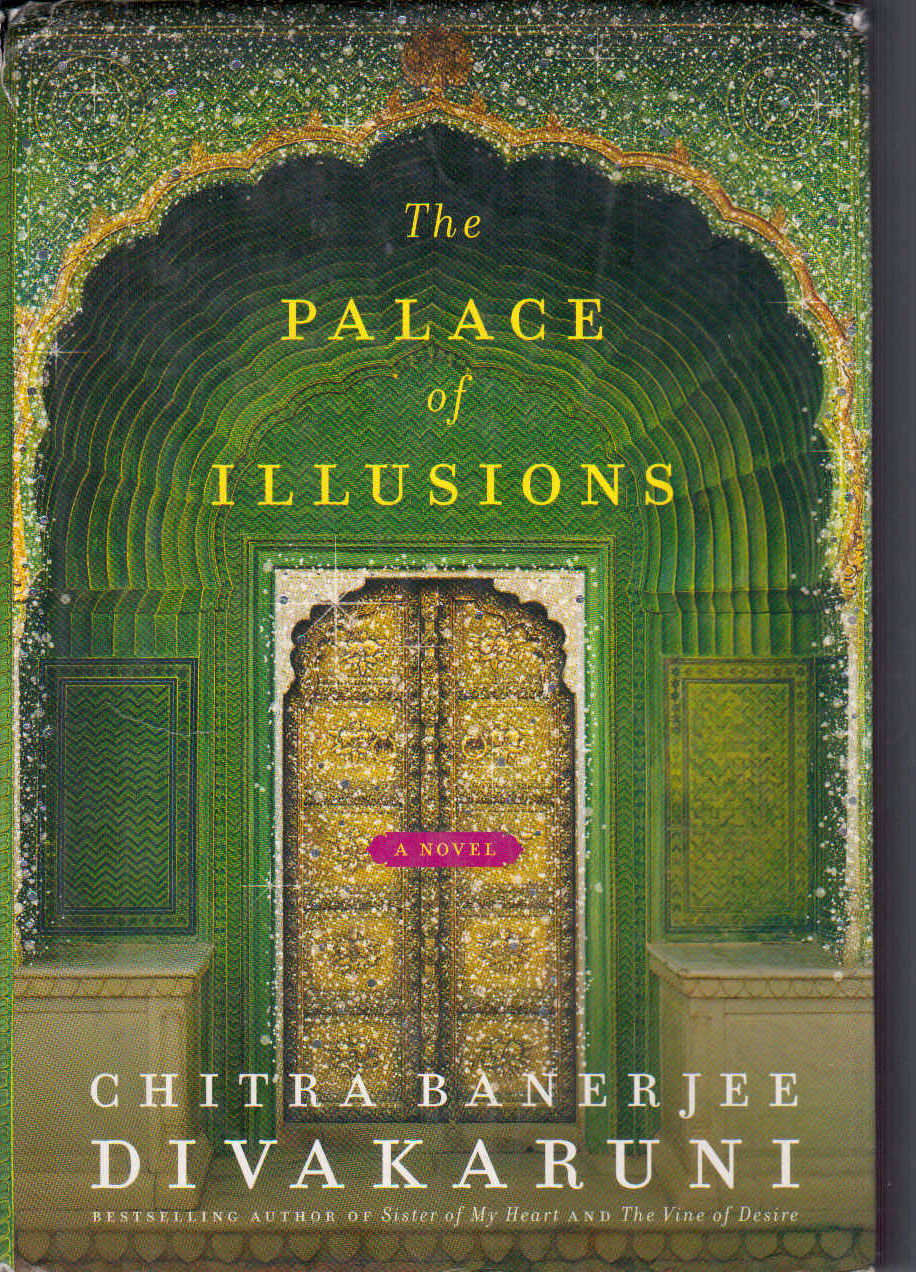
After learning the depressing fact that I read less than 10% from my TBR piles in 2014, I decided to read at least 2 books a month from my TBR pile going forward.  The first book I chose was Chitra Banerjee Divakaruni's The Palace of Illusions.  I purchased this book when it came out because, whoa!  Feminist retelling of the Mahabharata, that is fantastic!  I avoided reading this book for several years because, well, I wasn't sure if a feminist retelling of the Mahabharata was likely to be successful.

And I think my qualms were justified.  Much as I hate to admit it, it is very, very difficult to write the Mahabharata from a woman's perspective, particularly from the point of view of Draupadi, who had basically zero agency in her whole life.  She was born from fire to usher in the Kali Yuga, she was destined from a prior life to have five husbands, and people think she started a war that was probably more likely caused by one of her husbands' gambling addictions.

The Mahabharata is one of Hinduism's greatest epics, describing the end of the golden age and the start of the chaotic age (which we are still living in today, if you couldn't tell).  It is a truly enthralling and entertaining story, but it's very heavy-handed with predestination and fate and KNOW YOUR ROLE OR THERE WILL BE CONSEQUENCES (this is, after all, the religion of the caste system).  Really, when you think about it, no one in the story has much control over the major events of their lives because the gods all decided what would happen eons ago.

This is not to say that the Mahabharata is not worth reading.  It is.  I love it.  There is SO MUCH going on there, so many side stories, so many giants of history - it's fascinating.  But it's a difficult story to use to shift perspective.  Perhaps if you are not familiar with the Mahabharata, this book would work better for you.  But as someone with at least a passing knowledge of the story, this novel really didn't work for me.

The main reason for this is Draupadi herself.  When she came of an age to marry, Draupadi's father held a huge contest for all the warriors in the land to come win her.  They had to accomplish a very difficult feat.  Arjuna, one of five Pandava brothers, won the contest and therefore won her hand.  Through a weird twist in circumstances, Draupadi actually had to marry all five of the Pandavas, but Arjuna was the one who won her originally and the one she had been planning to marry for her whole life.

In this retelling, Draupadi apparently spends her entire life in love with Karna, a sworn enemy of the Pandavas (yes, all five of them).  She sees a painting of him, someone describes his (admittedly very sad and pitiable) story to her, and then Arjuna just can't hold a candle to him.

I get wanting to give Draupadi SOME agency in her life because otherwise, there is not much there.  But doing this is like re-writing the story of Cinderella, having her get all dolled up for the ball, and then, in a weird twist of fate, making  Prince Charming fall in love with one of the ugly step-sisters before Cinderella even has a chance to win him over.  It totally changes the ENTIRE story, and then you have to change EVERY OTHER part of the story somehow to make the circle fit the square.  I just could not get over this fact.  And the way Draupadi spends literally decades not even seeing or interacting with Karna but apparently thinking about him all the time, even while she has five other husbands right there, is just ridiculous.  It's hard to take her seriously.

I also think that trying to fit the entire Mahabharata into one fairly slim book is a tall order.  Divakaruni brought some stories to life here, especially those related to Bhima and Krishna, but she didn't flesh out most of the other people at all.  Arjuna is one of the main characters in the Mahabharata and he barely says ten sentences in this whole book.  I can see why this is the case if Divakaruni wants Karna to come out as the hero, but Arjuna is a pretty complex and interesting character in his own right, much like Lancelot, and he's given short shrift here.

There are some aspects of this book that I really enjoyed.  Karna really was a pretty amazing person with a horrible string of bad luck, and it's nice to see him get some positive attention.  Divakaruni makes pretty clear here how unfair people were to him his whole life and how the whole caste system mentality really took a number on him.

Krishna is probably one of the most-loved gods in all Hindu mythology, and he was great in this book.  All vague pronouncements and comments about letting go and moving on and not getting too attached to worldly goods, shared in a sufficiently god-like fashion.  Draupadi's relationship with Krishna starts out as friendship, turns into something similar to a parent-child relationship, and finally ends with a really beautiful section about her personal relationship with God.

I have a feeling my reaction to this book is based a lot upon having read and heard so many of these stories growing up, and watching the amazing television spectacle every week with my whole family growing up.  It's hard to have one version of the story in your mind and then read this one.  I would suspect that if you are not familiar with the Mahabharata, you might enjoy this book more than I did.

Thursday, January 22, 2015

If at first you don't succeed, try, try again

Life After Life
I read Kate Atkinson's Life After Life for a book club I just joined.  I read it as an audiobook, which I think was a mistake.  The book jumps around in time so often and references side characters and events quite often and I'm sure I missed quite a bit.  This is a book that requires flipping from one section back to previous ones and forward to new ones as Ursula basically lives a Choose Your Own Adventure.  But it's a long book and I knew I wouldn't get through it in time for the meeting unless I was reading it on my commute, and one of my new years resolutions for 2015 is to get out more and meet new people, so I really wanted to do well for my first book club, so audiobook it was!

The book is about Ursula Todd, a girl born in 1910 who then goes onto live several different versions of her life.  Once, she died at birth.  Another time, she died by drowning.  Another time, she fell off a roof.  Eventually, she manages to grow out of childhood, really coming into her own during WWII.  Sometimes, she lives in Germany during the war.  Sometimes, she lives in London.  In one life (not a spoiler as this is the very beginning of the book), she shoots Hitler but it's unclear what happens after this.  This annoyed me as the book is quite long and it would be nice to know how that life ended...

Monday, December 22, 2014

Review-itas: Life through the 20th century

Bud, Not Buddy
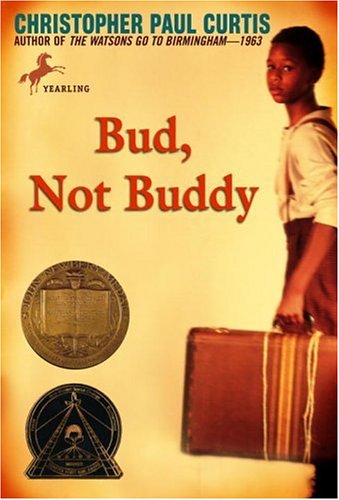
Bud, Not Buddy, by Christopher Paul Curtis, is about a 10-year-old orphan boy living through the Great Depression in Michigan.  Bud's mother passed away when he was six and he never knew his father.  But in his suitcase filled with his most prized possessions, he has fliers that his mother saved over the years.  The fliers show a jazz band, and Bud's sure that his father is in that band, so he sets off to go find him.

I read Curtis' The Mighty Miss Malone earlier this year and quickly decided that I should read all of his other books, on audiobook if possible.  Bud, Not Buddy is my second Curtis book and Deza Malone even has a cameo!

I like the way Curtis writes about a black child's experience of the Great Depression.  While the Great Depression was difficult for everyone, it was particularly hard on people of color who were passed over for jobs, often couldn't own property, and were discriminated against in many ways.  I think Curtis does really well in bringing these important facts to life in ways that would make children curious to learn more and have a discussion with their parents or a teacher about how people experience the same world differently.

As with The Mighty Miss Malone, I liked how Curtis showed examples of different family structures.  Bud is an orphan but has many happy memories of growing up with a single mom.  He meets a stranger who is a proud father of a growing (and very fun) family, and a jazz band that acts as a family.  While I didn't love Bud, Not Buddy as much as I did The Mighty Miss Malone, I did enjoy learning even more about the Great Depression and am looking forward to Curtis' perspective on other important historical events in American history.


Brown Girl Dreaming
Jacqueline Woodson's memoir in free verse, Brown Girl Dreaming, is set in the 1960s and moves from Ohio to South Carolina to New York.  I did this book on audio.  I do better with poetry in audio since I don't worry so much about whether I am getting the pacing and the rhythm right.  Like pretty much everyone else, I loved it.

Woodson's stories tell of her early childhood growing up during a tumultuous time in American history, struggling with school, and falling in love with words and the art of story-telling.  I wish I had read this in physical form because the poetry is stunning.  I love the way Woodson confused facts and stories - she would hear something and then immediately incorporate that fact into a story about herself.  It wasn't lying, it was learning the art of the story, and she excelled at it.  This excerpt sums up very well the way I felt reading this book - I didn't want it to end, either:

“I am not my sister. 
Words from the books curl around each other
make little sense
until
I read them again
and again, the story
settling into memory. Too slow my teacher says.
Read Faster.
Too babyish,
 the teacher says.
Read older.
But I don't want to read faster or older or
any way else that might
make the story disappear too quickly from where
it's settling
inside my brain,
slowly becoming a part of me. 
A story I will remember 
long after I've read it for the second, third, 
tenth, hundredth time.” 


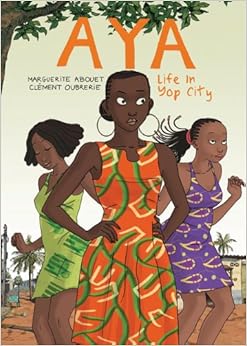
Aya:  Life in Yop City, by Marguerite Abouet and Clement Oubrerie is about 3 teenaged girls growing up in boom-time 1970s and 1980s Ivory Coast.  Aya is dedicated to going to medical school and doesn't let anything distract her from that goal.  Her friends Adjoua and Bintou, however, are more easily distracted.  The three of them deal with a lot of family drama (seriously - everything from paternity drama to secret second family drama to homosexuality and everything in between).

I am a little torn about this book.  On the surface, it's like a soap opera, with twists and turns on every level.  I don't know much at all about what life is like in a polygamous society, but it seems very complicated!  It was so interesting to learn about such a foreign culture, from the funeral parties to beauty pageant, from polygamy to witch doctors.  Everything was new to me!

On another level, though, the book touches on some really important themes.  For example, Aya wants to be a doctor, but her father just wants her to get married to some rich guy.  Aya's girlfriends seem sexually liberated and like they just want to have fun in life, but they both deal with very real consequences of their promiscuity while the men seem to get off pretty easily.  Aya's mother wrestles with the knowledge that her husband sleeps with many other women but gets very little sympathy because every man does that.  And the two gay men in the book struggle with their homosexuality and what to do, knowing that they will never be accepted.  And there are more examples of this - the beauty pageant, Aya's friend's impending marriage to a much older man, the catcalls every woman faces each time she walks down the street...


This is why I think perhaps the translation was a little lacking.  The translator did a great job of getting the humor and wit across in each panel, but it was harder for me to understand the deeper issues and social commentary that were under the current here.  Was Abouet just writing a fun drama?  Or did she have more meaningful messages that she wanted to share?  My opinion is that the latter is true (but I also probably look for feminism everywhere).  In any case, this book is worth reading just for the immersion in another culture and the fantastic, vivid art.  And, PS, it was made into an animated movie!  I'll have to try and find it (with subtitles).


Thursday, November 13, 2014

The ups and downs of a medical family

Cutting for Stone
Abraham Verghese's Cutting for Stone is a novel that spans three continents, two generations, and multiple revolutions.  It's set mostly in Ethiopia and the United States, though in both countries, the majority of the action takes place in hospitals that cater to the poor.  The plot is pretty hard to summarize, so I'll share the short but sweet description from the book:

Marion and Shiva Stone are twin brothers born of a secret union between a beautiful Indian nun and a brash British surgeon. Orphaned by their mother’s death and their father’s disappearance, bound together by a preternatural connection and a shared fascination with medicine, the twins come of age as Ethiopia hovers on the brink of revolution. 

Moving from Addis Ababa to New York City and back again, Cutting for Stone is an unforgettable story of love and betrayal, medicine and ordinary miracles--and two brothers whose fates are forever intertwined.

Medicine is central to this novel, and there are a lot of detailed and graphic descriptions of injuries, maladies, and surgeries.  These were very difficult for me to listen to via audiobook, and I admit I fast-forwarded through many of those procedures.  It's hard to listen to a narrator speak dispassionately about incisions being made, blood pooling on the floor, and organs failing.  That said, I thought about both my father and brother while reading this book.  Both of them are physicians, and Verghese's clear knowledge of medicine, and his great empathy for patients and his obvious regard for the ethical responsibilities that doctors have towards their patients really stood out to me.  So often, now, we hear about how modern healthcare has made it difficult for physicians to connect with their patients.  They have so much paperwork to fill out, so many procedures to do, so much fear of being sued, that the relationship can often feel more combative or tense than healing.  But many doctors still care deeply for their patients.  My father has been practicing for many years now and has seen multiple generations of the same family come through his office.  It struck a chord to read a book that focused so much on the deep, lasting and positive impact that doctors have on so many lives.

I really enjoyed reading about hospital life, the camaraderie between the doctors, the responsibility to do no harm, the need to do extraordinary work with very limited resources.  I also loved some of the characters in this story, particularly Hema and Ghosh.  Hema and Ghosh adopt Marion and Shiva at birth, and the two of them are such strong, caring, and wonderful people.  I loved their marriage, which was based on such a strong foundation of friendship.  When they married, they agreed to renew their marriage contract every year, and each year, they go out celebrating and Ghosh proposes again.  The two doctors are also wonderful mentors to the twins, and the whole family interaction is great to read.

That said, I didn't much care for the two central plots of the novel - first, the mystery surrounding the Stone brothers' father, Thomas Stone; and second, the often toxic relationship between Marion and the "love of his life," Gennet.  I liked Thomas Stone, though he wasn't a character one got to know very well.  But he wasn't around that often at all, and so building an entire story around him and his abandonment was difficult to pull off.  I just didn't care about the tension between Thomas Stone and Marion Stone.  I cared more about how they both interacted with their patients.  I cared even less for the drama around Gennet, Marion's childhood friend and the girl he decided he was in love with (why, I don't know).  She was only ever described to us by Marion, and she didn't come into her own.  There was also a horrible scene in which Marion took advantage of Gennet because he saw himself as a "victim," and I just couldn't stomach it, and pretty much lost all respect for Marion after that.  He never seemed to even consider that he treated her badly, only saw how she was unkind to him.  There was no self-examination, and I hated that.  For someone that was supposed to be compassionate and kind towards those he loved and cared for, he was not at all compassionate or kind towards Gennet, only seeing her as an object for what he wanted for himself.

Overall, this book was a mixed bag for me.  While I liked the medical side of it, I didn't care much for the family drama.

Monday, October 27, 2014

Subversive Superhero

The Shadow Hero
The Shadow Hero, by Gene Luen Yang & Sonny Liew, is so much fun to read.  The backstory is fantastic, the Asian-American hero is wonderful, the family dynamics are great, and it seems like Yang and Liew had a blast working on it together.

The book description from School Library Journal is pretty spot on, so here it is:

Award-winning author Yang and artist Liew tackle a lesser-known aspect of history, breathing new life into the Green Turtle, a 1940s comic book hero. According to lore, the Green Turtle was originally drawn to be Chinese, but publishers quashed artist Chu Hing's plans, and Hing rebelled by drawing his hero so that his face was never visible. 

The Green Turtle is cast as an unlikely 19-year-old young man, Hank, the son of Chinese immigrants who own a grocery store in 1940s America. When his mother is rescued by a superhero, the loving but overbearing woman decides that it's Hank's fate to become a hero himself, and she does everything in her power to push her son in that direction. Though Hank initially shies away from assuming the role of caped crusader, when tragedy strikes, he's eventually inspired to call himself the Green Turtle, and fight back against gangsters who have been intimidating his family and many others in Chinatown. 

Liew's scratchy, action-packed illustrations have a nostalgia-tinged vibe ideal for the gritty/hard-boiled setting, and Yang plays expertly with clichés and stereotypes about Chinese culture without ever becoming heavy-handed or obvious. A detail about the four spirits of China, one of whom allies himself with Hank's father and then Hank, injects an element of magic and of Chinese history and mythology that made Yang's American Born Chinese (First Second, 2001) such a layered and complex work. - Mahnaz Dar

How brilliant does that sound?  REALLY brilliant, and it delivers.

I have not been reading much lately.  I am not sure what happened, but after #Diversiverse, I just couldn't find any books that kept my interest and I kept flitting from one to another.  When this happens, I usually go back to the genres that I grew up on - epic fantasy and Georgette Heyer (fine, she's not a genre all her own, but she is for me).  Neither of those appealed to me this time, either, so I turned to graphic novels, and hooray!  Not only did it (mostly) work, but it also gave me the opportunity to read a book that everyone in blogosphere has loved.


I really enjoyed The Shadow Hero, not just because the premise is so fantastically subversive, though that's a lot of the reason.  I LOVE the idea that someone stuck it to the man right in front of the man's face.  But the book also has so many wonderfully realistic, self-deprecating, humorous moments.

I could talk, too, about how well-integrated Chinese culture is in the story.  But honestly, it was the fun plot and the great artwork that worked for me in this story.  I love books in which diverse characters shine and defy stereotypes and do awesome things.  But I love them even more when they are fun and hilarious and well-illustrated.  The Shadow Hero is all of those things, and I can't wait to read more.


Monday, September 8, 2014

Sarah Waters proves her mastery over the post-WWI creepy relationship story

It's here, it's here!  Sarah Waters' eagerly anticipated new novel, The Paying Guests, hits shelves on the 16th and is sure to skyrocket to the best-seller list pretty much immediately.  I was absolutely thrilled to get an advance copy from LibraryThing.  It took me a while to get through this book because it is pretty long and, well, summer!  But I made it through to the end and I'm confident that if you enjoyed Waters' other novels, you will really enjoy this one.

The Paying Guests is set in post-WWI London.  The economy is not doing well, the class system is starting to break down, and there are many women living without the support of men.  Frances and her mother are two of those women - Frances' two brothers died in the war and her father passed away, too, leaving an old house and a lot of debts behind him.  To make ends meet, Frances and her mother decide to take in lodgers.  Enter Mr. and Mrs. Barber, a working-class couple who seem to embrace a more carefree, Bohemian lifestyle.  But sometimes, their marriage seems just a little bit less happy than they project to the world.  And as Frances spends more time with the couple and gets to know them better, she becomes intimately involved in their lives and can't quite get away.

I really like the cover shown on this one - not only is it in line with the rest of Waters' books, but I love the sinister look of it.  The woman standing in the light, and then a man to the side, watching her in the dark.  It really does evoke the feel of this book, the unease with which the characters approach each other.

If I could liken this book to another, I think the one that comes to mind is Donna Tartt's The Secret History.  I did not really enjoy The Secret History, and I admit that there were several times during The Paying Guests when I got a little tired as well.  It just started to feel so repetitive!  And I applaud Waters for being able to keep upping the ante and the tension for a good 300 pages or so, but GOSH, I got tired of it!  I would say more, except I am pretty sure that I would be accused of putting in spoilers.  But anyway - a lot of this book is about how relationships can evolve and change and backtrack and go in circles, particularly at times of stress.  It felt quite realistic to me, but also quite painful to read.  By the end, I wasn't really a big fan of any of the characters, though I started the book really liking all of them.

What is awesome about this book, though, is Waters' amazing turn of phrase.  Here are some of my favorites:

"Their friendship sometimes struck Frances as being like a piece of soap - like a piece of ancient kitchen soap that had got worn to the shape of her hand, but which had been dropped to the floor so many times it was never quite free of its bits of cinder."

"How well she filled her own skin! She might have been poured generously into it, like treacle."

"You don't think about all the colors when everything's going all right; you'd go mad if you did. But those colors are there, all the same. All the quarrels, and the bits of unkindness. And every so often something happens to put a chip right through; and then you can't NOT think of them."

"It was like a cure, being with Lilian. It made one feel like a piece of wax being cradled in a soft, warm palm."

Note:  I received an advance copy of this book in exchange for a review.  This review is based on an advance reader's copy.

Monday, August 25, 2014

Beautiful girls in the city by the bay

Shanghai Girls by Lisa See
I think Lisa See is one of those authors that I like in theory more than I do in actuality.  The plot summaries of her books sound so fascinating!  They take place at such pivotal moments in history, in such vivid settings!  But somehow, the characters never seem to come alive for me, and I'm left vaguely disappointed.

This is pretty much what my experience was reading Shanghai Girls.  Two sisters living it up in Shanghai in the 1930s!  Then they move to the US and struggle to make ends meet through the 1940s.  And deal with the racism of the Communist scare in the 50s.  It all sounds so fascinating.  But it just didn't work for me.

The book did have its good points.  I really enjoyed learning about the high-flying lifestyle of the Chinese middle class between the wars.  I had never heard of the "beautiful girls" who posed for commercial artists in China in the 1930s, whose likenesses ended up anywhere from ads for matchsticks to (later on) propaganda for communism.  I also didn't know much about the conditions for immigration into the US in the 30s, and just how blatantly racist the system was.  It never fails to amaze me just how horribly western governments treated non-whites for so long.  And seeing just how deeply the Red Scare infiltrated people's everyday lives (especially those with a direct link to a Communist country) was eye-opening.  Really important, fascinating stuff.

But gosh, the characters did not do it for me.  The two sisters, Pearl and May, were hard to know and not very likable.  The story is told from Pearl's point of view, but she is not a very dynamic character, and it was a little boring to spend so much time inside her head.  She was scared of everything.  (Granted, much of it with good reason.)  And her sister, May, was so self-absorbed and spoiled that I didn't want to spend much time with her, either.  The other characters were fine, I guess, but didn't stand out as having distinct personalities.  Really, the book seemed to be more about all the suffering and hardship the characters went through rather than their development into strong and individual people.  This is how I felt when reading Snow Flower and the Secret Fan, too - I just felt like all the characters kept me at arm's length, and as a result, I just never felt emotionally connected to this one.

Thursday, August 14, 2014

Death of a Frog-Catching Cross-Dresser

Frog Music Emma Donoghue
Emma Donoghue's Frog Music has gotten a lot of attention because, well, it's Emma Donoghue.  Frog Music is her first novel since Room, but has more in common with her previous novels than with that one.  It's a historical fiction book that is based on a true story - or rather, a small newspaper blurb about a murder that remains unsolved which Donoghue spun into a story.  I love the way she does this.  She did the same thing in her novels Slammerkin and Life Mask, both of which I really enjoyed.

The plot as described by the publisher is:

Summer of 1876: San Francisco is in the fierce grip of a record-breaking heat wave and a smallpox epidemic. Through the window of a railroad saloon, a young woman named Jenny Bonnet is shot dead. 

The survivor, her friend Blanche Beunon, is a French burlesque dancer. Over the next three days, she will risk everything to bring Jenny's murderer to justice--if he doesn't track her down first. The story Blanche struggles to piece together is one of free-love bohemians, desperate paupers, and arrogant millionaires; of jealous men, icy women, and damaged children. It's the secret life of Jenny herself, a notorious character who breaks the law every morning by getting dressed: a charmer as slippery as the frogs she hunts.

In thrilling, cinematic style, FROG MUSIC digs up a long-forgotten, never-solved crime. Full of songs that migrated across the world, Emma Donoghue's lyrical tale of love and bloodshed among lowlifes captures the pulse of a boomtown like no other. 

The two main characters in this book, Jenny Bonnet and Blanche Beunon, come blazingly to life.  Jenny has a carefree and seemingly happy-go-lucky approach to the world but asks all sorts of questions that set Blanche on edge.  And Blanche starts the book thinking that she is doing pretty well in life with a boyfriend who loves her and a job that pays well, but ends the book as a determined and resourceful woman who depends on no one but herself.


I appreciated the way Donoghue wrote these two characters.  She plays a lot with the roles of women and feminism and female friendships in all her historical novels, and this one was no exception.  She gives us insight into how a woman can be a mother who loves her child enough to risk everything for him, but still feel unsure about whether she likes her baby because he cries all the time and seems not to appreciate all the work she does for him.  She shows how friendship can develop between two women so quickly so that they understand so much about one another, even when they know hardly anything about each other's backgrounds.  The friendship that develops between Jenny and Blanche is wonderful to see unfold.

This is one of those books in which the setting, a sultry San Francisco in the decade after the Civil War, is a main character that almost steals the show from the people who populate it.  I enjoyed reading about all the saloons and dance halls and neighborhoods; I'm sure people who live in San Francisco would enjoy it even more.

I read Frog Music as an audiobook, so the songs and the accents came to life for me in a way that I am sure would not have happened had I read the novel in the more traditional format.  I appreciated this because other things made the audiobook pretty difficult.  The story unfolds in different time periods and even from within those two time periods, there are flashbacks, and the narrative jumps all over the place.  In the audiobook, especially at first, it was hard for me to always make those jumps and I got confused.  This got easier as the story went on, but I can't help feeling like I missed some key things at the beginning that were probably important.

I think I appreciated this book more for its themes and messages than for the story itself.  While I loved the central characters, I didn't much care for the mystery or about the unsavory people in Blanche's life.  As these were pretty key components to the story, I am unsure of whether I can say that I really loved the book.  All I can say is that the characters were so vividly drawn, and the setting came to life so well, that I suppose for me the plot was the frosting, not the cake.  

Thursday, August 7, 2014

Whoa, timelines are complicated when you are a time traveler


Ok, so these books by Connie Willis are absolutely massive, weighing in at over 1100 pages combined.  I am reviewing Blackout and All Clear together as they are technically two halves of the same book, but were separated due to the large size.  However, you really can't read All Clear without reading Blackout.

It's pretty difficult to do a summary of such a huge book without giving away spoilers.  Suffice it to say that three historians travel back in time from 2060 Oxford to 1941 London during the Blitz to observe what life was like for civilians during such a tense and stressful time.  And things go very, very wrong, so the three of them are basically stuck in WWII.  And then they get even more stressed out because it's possible that they are having an impact on historic events - what if they changed the course of history?  Uh-oh!

I have been going back and forth over whether I should even review these books.  There are already a lot of reviews out there, and I am not sure I have much more to add to the discussion.  I fell in love with Connie Willis when I read To Say Nothing of the Dog, which was wonderful and hilarious and romantic and not really in the same style as any of her other work.  Then I read The Doomsday Book, which was not funny at all but very tense and quiet.  Blackout and All Clear are a mix of all of these - there are moments of humor, quite a bit of tension, though not a whole lot of quiet.  Obviously, in the midst of the Blitz, there are a lot of sirens and booms and planes.  The books are long but read very quickly, mostly because you are so stressed out about what is going to happen that you are incapable of doing anything but reading very quickly to find out what happens next.  Willis definitely knows how to write a nail-biting, stomach-clenching story, and she's in fine form with that here.

Willis also really knows her London map, buses to Underground to streets and back alleys.  She makes sure that all her readers know that she knows the map, too.  I think the book could have been cut by at least 20% if she would stop telling us all the directions and transfers that her characters kept taking.  They got old to me after a while, but I can see how telling everyone just how many stops were closed down due to bombs, and all the complicated ways people had to get around instead, was a great way of adding to the setting and atmosphere of this story.

Truly, these books brought to life just how harrowing living through the Blitz may have been.  I think the London Blitz is one of those moments in time that the English like to look back on with pride at getting through, and I expect it's romanticized quite a bit.  After all, it's not like the English weren't crossing the Channel and doing much the same thing to other cities on the Continent.  Willis goes full throttle into the romanticism, calling out the many unsung heroes that kept St. Paul's Cathedral standing, that helped save friends out of the rubble, that worked to keep up the spirits of their comrades with plays and dramas and small, unexpected gifts.  And I liked that.  I am sure that there was looting and fighting and all sorts of horrors that happened during the Blitz, but hey, sometimes you just want to hear about the good things and not the bad.  There is a time for gray areas and people with complex motivations, but perhaps a story about everyday heroes is not the place for them.  I respect that.

My main complaint with this book probably isn't a fair one, so I'll just touch briefly upon it here.  Couldn't there have been just one person of color in the story?!  I mean, there's this Badri guy who seems to just kind of mess up people's space-time coordinates (assuming he is South Asian based on his name), but he is the ONLY ONE, and he can hardly be counted as even a secondary character.  I mean, come on.  These historians are traveling back in time from 2060 - there's probably a lot of mixed race people at that time.  And maybe they are mixed race, but their names and physical descriptions make it hard to believe that they are.  And then there's the people in London, which was the seat of a global empire, and apparently NO ONE there was not white, even so.  It bothered me a lot.  In a book of 1100 pages set in the midst of a massive world war, I feel like there could have been one person.

Anyway, I have talked in zero ways about the plot or the characters of this book, and have managed to write quite a bit.  I don't really want to talk plot or characters. The plot is a bit complex and I don't want to spoil what was really a great ride for you. And while I enjoyed the main characters, I didn't fall in love with any of them. Really, my heart belonged to the secondary characters in this one, and they make so many of the scenes so wonderful that I have a feeling you will fall for them, too.

Thursday, July 31, 2014

Mid-Summer Reviewitas

According to LibraryThing, How Green Was My Valley entered my TBR pile on December 1st, 2006.  And there it sat until, in one of my bursts of TBR pile guilt, I decided to knock it off my list via audiobook.

The book is about Huw Morgan, who grows up in a rural mining community in Wales.  The story is told from the POV of Huw many years later, as he looks back on all the hardships and drama that impacted the people around him, and his fruitless love for his beautiful sister-in-law.

The story is about a coal mining family in the early 20th century, so obviously it's not a super-happy story.  There are strikes and hard times, lusting after other people's spouses, people leaving for better opportunities, and crazy gossip that people take crazy seriously.  The book felt like a well-written soap opera about the working class.

Llewelyn really fits the Welsh stereotype of being wonderfully musical.  His sentences are like songs, with a rhythm and dance all their own.  I am glad I have this book on my shelves so that I can read it with my eyes one day, not just with my ears.

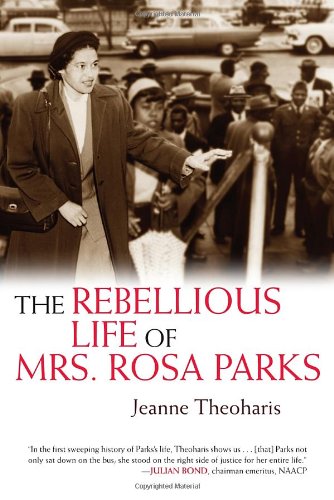
The Rebellious Life of Mrs. Rosa Parks, by Jeanne Theoharis, is one I've had on my Kindle for some months now.  Rosa Parks is a personal hero as well as a national one.  For those who may not know the American Civil Rights movement well, Rosa Parks was the woman "who started it all" by refusing to get up from her seat on a segregated bus in Montgomery, Alabama.  She was used as a symbol to rally around, the impetus for the Montgomery bus boycott that ended in de-segregating the buses, and Martin Luther King, Jr. shot to fame and the Civil Rights movement was underway.

But there was obviously much more to the Civil Rights movement, and there was a great deal more to Rosa Parks, too.  Her refusal to give up her seat on the bus was just one of many acts of defiance - she had been active in the movement for years before and she stayed active for years later; as she said, "It's always amazing to me that people thought it was [startling].  It seems to me it's natural to want to be treated as a human being."  She truly was an amazingly determined woman who "was quiet and sweet, but strong as acid."  (What a fantastic way of describing a person!  I love it!)

I admit this book became a bit repetitive and dry in the later chapters.  Rosa Parks struggled a lot, both in Montgomery and Detroit, and the author spent a lot of time discussing how soul-killing the Civil Rights movement could be, when people thought no change would come in their lifetimes.  But Parks truly was such an inspiring and wonderful person, well deserving of a detailed biography, and I'm so glad to have learned more about her.

JK Rowling/Robert Galbraith's second book in the Cormoran Strike mystery series is called The Silkworm.  This time, Cormoran and Strike are on the case of a missing B-list author whose last unpublished manuscript excoriated many people in the book business.

Between The Cuckoo's Calling and The Silkworm, Rowling has a lot of commentary on the upper echelons of British cultural society.  Most of it isn't very positive, so I wonder how bored she gets at all the publishing galas and dinners that she probably must attend.

This outing is even darker than The Cuckoo's Calling.  The missing author wrote truly bizarre scenes and left chaos in his wake.  Strike's ex-fiancee, Charlotte, is engaged to be married, and he has to come to terms with that and with the tiny jibes that she keeps sending his way.  I admit that, only two books into this series, I am already tired of the whole Strike/Charlotte drama.  It just seems to take up so much of Strike's emotional stores and Charlotte isn't given enough of a personality for us to really care what she does, anyway.  She's just like this succubus, taking time and energy and will away from the story and Strike.

In these two books, I also was annoyed by Robin's relationship with her fiancee.  She's an intelligent, driven, and beautiful woman, and it's hard to believe that she would waste her time on someone who did not value her or treat her well.  Unfortunately, that's pretty much exactly what her fiancee is like.  But through The Silkworm, we get a few hints at what drew her to him in the first place - she says very clearly that she loves him and wants to marry him, and she tells him what she wants to do with her life.  And I appreciated that.  I did not want to be in a story with another beautiful, intelligent woman who just doesn't have the self-esteem to leave the jerk she's with behind.

The relationship I do love in this series is the friendship between Cormoran and Robin.  It continues to develop here, and I look forward to seeing that continue.

Monday, July 28, 2014

#Diversiverse Genre Spotlight: Historical Fiction

In anticipation of the A More Diverse Universe challenge in September (still looking for button designers, by the way!), last week I posted a list of non-fiction books by diverse authors.  Thank you to everyone who chimed in with recommendations!  I love when people do that, it makes me feel like part of an active community.

Now that I've gotten non-fiction out of the way, though, I'm a bit flummoxed about the entire fiction genre.  It's so vast!  And there are so many sub-genres!  And how do you compile a list?  I chose to start with historical fiction because it seems like a very popular reading genre.  And, more importantly, unlike fantasy and young adult fiction, I don't think there are a ton of resources out there to help guide you to a book choice if you enjoy historical fiction and want to read more diversely.

I am taking a page from the #WeNeedDiverseBooks campaign (which is a glorious website and the main reason I will not be devoting a list to young adult fiction), and using the "If you like ____, then read _____ next because _______" format here.  Hopefully you will find something that piques your interest!

Similar to my non-fiction list, I will not include here books that are only about immigration or cultural differences or assimilation.  There are so many books out there like that, and I think they are part of the reason people are intimidated to read diversely - all the books sound the same.  But there are so many other rich stories out there for you to discover, and I am going to focus on those here.

And if you have suggestions here, too, please feel free to fill up the comment section!


If you like John Shors' Beneath a Marble Sky, then read The Twentieth Wife, by Indu Sundaresan, because it's about a woman who rises to become Empress of the Mughal Court in 17th century India.


If you like Winter's Tale, by Mark Helprin, then read The House of the Spirits, by Isabel Allende because she rocks the magical realism in a big old rambling house, too.


If you like Colin Cotterill's The Coroner's Lunch about life in Laos under an oppressive Communist regime, then read Malla Nunn's Detective Cooper series because it features a gloriously conflicted detective in Apartheid South Africa.


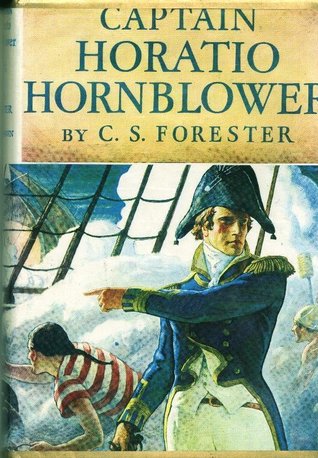
If you enjoy CS Forster's Horatio Hornblower series, try Amitav Ghosh's Sea of Poppies, the first book in the Ibis Trilogy, set on a huge trade ship during the Opium Wars of the 19th century.


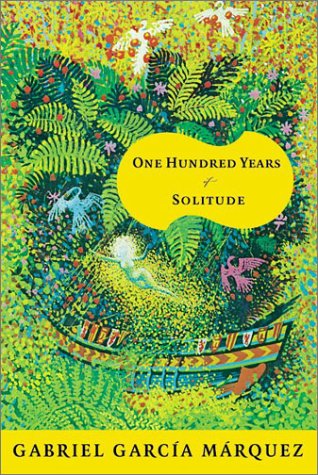
If you like the big, chunky family epics, then try One Hundred Years of Solitude, by Gabriel Garcia-Marquez because it reads like a beautiful, lyrical soap opera across the decades.


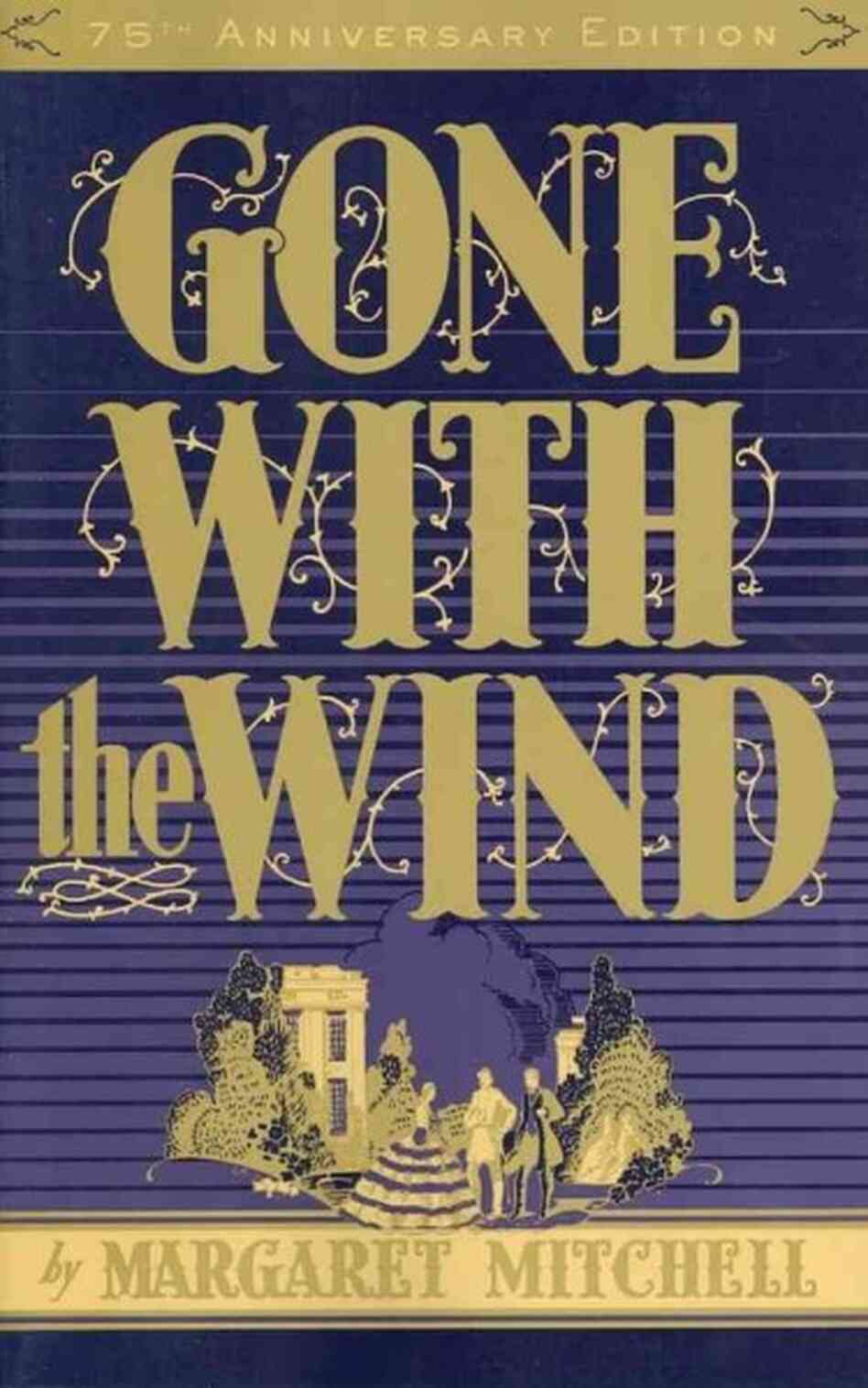
If you like Margaret Mitchell's Gone with the Wind, try Wench, by Dolen Perkins-Valdez for a telling and intense story of what life was like as a slave.


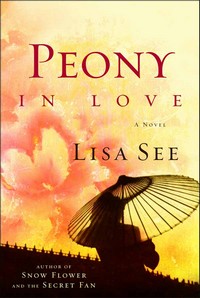
If you like Pearl S. Buck's Pavillion of Women, then read Peony in Love, by Lisa See for a different look at life as a woman in imperial China.


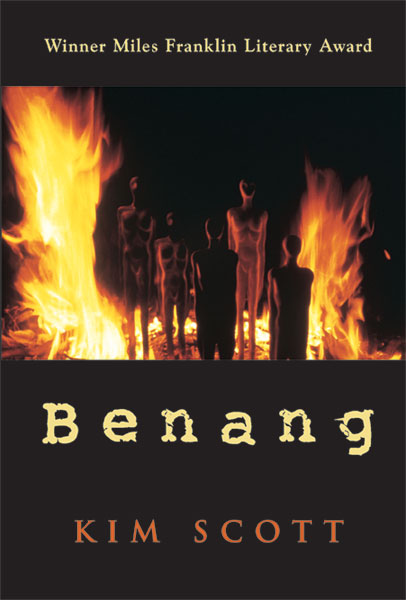
If you like The Secret River, by Kate Grenville, then read Benang, by Kim Scott because it talks about the European treatment of Aborigines from the side of the Aborigines.


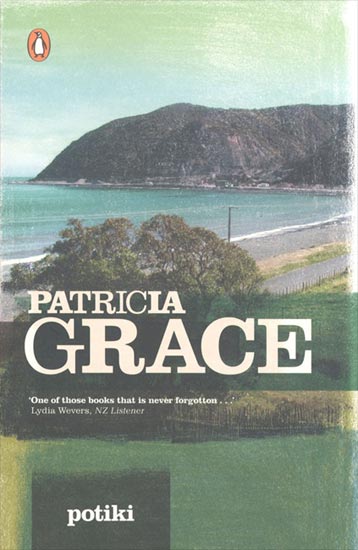
If you liked the gritty, complicated relationships that populated The Bone People, by Keri Hulme, then read Potiki, by Patricia Grace because it too focuses on how complicated the race situation in New Zealand can be.


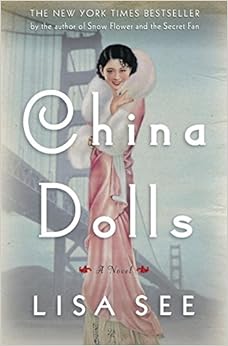
If you like Frog Music, by Emma Donoghue, then read China Dolls, by Lisa See about another rollicking time in San Francisco's history, the 1930s.


If you like Hotel on the Corner of Bitter and Sweet, by Jamie Ford, then read When the Emperor Was Divine, by Julie Otsuka about life in the American internment camps for Japanese during WWII.


If you like When a Tree Grows in Brooklyn, by Betty Smith, try Small Island, by Andrea Levy as it also focuses on the tough life of an immigrant family trying to make it in a big city.


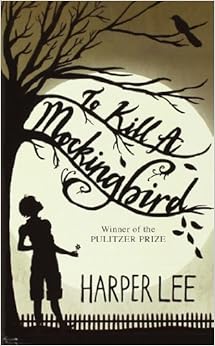
If you enjoyed To Kill a Mockingbird, by Harper Lee, then read The Round House, by Louise Erdrich, which turns the story on its tail and focuses on a Native American woman unable to go after the man who abused her.  To be fair, The Round House is not technically historical fiction, but if you enjoy To Kill a Mockingbird (which was not historical fiction when it was written), then you really should read this one.


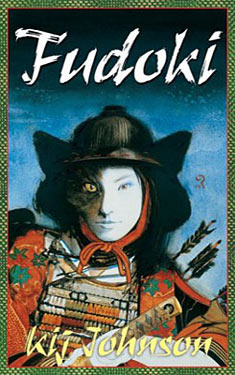
If you like the pageantry and court intrigue of Wolf Hall, by Hilary Mantel, then try Fudoki, by Kij Johnson, set in the pomp and glory of 11th century Japan.


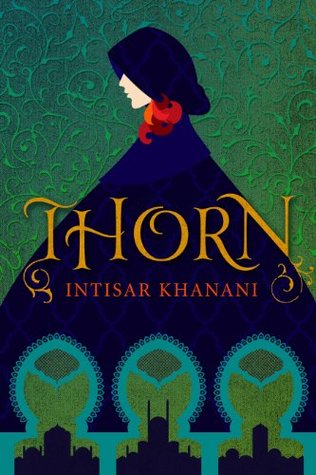
If you enjoy fairy tale retellings, then try Boy, Snow, Bird, by Helen Oyeyemi, which is a retelling of Snow White.  Or try Thorn, by Intisar Khanani, a retelling of The Goose Girl.  Or The Palace of Illusions, by Chitra Divakarumi, a feminist retelling of the Hindu epic The Mahabharata.


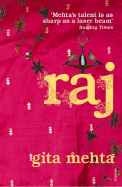
If you enjoy MM Kaye's stories about India under the Raj, then read Raj, by Gita Mehta, about life as a member of the increasingly marginalized ruling class in India.


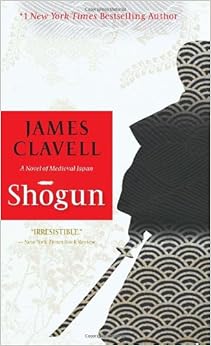
If you enjoy Shogun, by James Clavell, try Musashi, by Eiji Yoshikawa for an epic tale of life as a samurai in the 17th century