Showing posts with label mental illness. Show all posts

Thursday, September 18, 2014

#Diversiverse Review: The Book of Unknown Americans

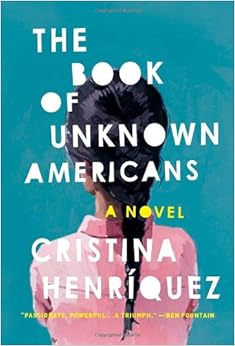
Cristina Henriquez's novel The Book of Unknown Americans is
is mainly about two families. The Toro family moved to the US years ago from Panama and have assimilated pretty completely into American life. The father works at a restaurant, the older son has a soccer scholarship for college, and the second son, Mayor, is in his rebellious stage in high school, trying not to be (negatively) compared to his brother all the time. The Rivera family has recently moved to the US. Maribel, the teenage daughter, recently had an accident that caused brain damage, and her parents brought her to the US for better care.

The story is narrated by Maribel’s mother, Alma, and Mayor, the rebellious younger son of the Toro family. Every couple of chapters, there are interludes in which other minor characters share their life stories. These interludes were my favorite part of the book. I loved seeing a character in one light and then learning about her difficult life path and gaining a better understanding of what made her the way she was. I loved hearing stories of how people met and how they all decided to move to the small apartment block in Delaware in which they all ended up. And what they’ve done since they arrived there.

I also really enjoyed Alma’s voice. Henriquez wrote about her struggles wonderfully – her guilt over Maribel’s accident, her inability to come to terms with the fact that her daughter will never be the same, her terror in a new country where she feels she cannot protect her daughter from harm, and the way all of these things affect her relationship with her husband. Alma was such a well-developed character, and her fears and concerns became my fears and concerns, too. I also appreciated that for Alma, it was the white characters and the Americans that were frightening. Most of the time, we hear the other side of the story, but through Alma’s eyes, we can see just how menacing Americans can be to foreigners, especially those who don’t speak English well and have beautiful, disabled children.

I didn’t like Mayor’s sections nearly as much. I admit that I was a little disturbed by Mayor’s obsession with Maribel, a mentally handicapped girl who also happened to be breath-takingly beautiful. Would he have felt so drawn to her if she wasn’t beautiful? I think readers are supposed to believe that Mayor and Maribel are totally in love and meant to be together (at least, we are told that multiple times by Mayor), but I didn’t buy it. And Mayor’s complete disregard for Maribel’s parents’ wishes or his own parents rules were maybe true to his life stage, but again, it really felt like he took advantage of Maribel, and I was pretty uncomfortable with that. Maybe if Maribel had a voice in the story, it would have felt better. But we never hear her side of anything, and so it felt a lot like she just kind of went with Mayor because it was easy, not really because she wanted it.

Unfortunately, Mayor is a pretty key character in this book so his sections impacted my overall enjoyment of this novel. But for the interludes from the minor characters alone, and for Alma’s story, it’s well worth reading this book. I really enjoyed hearing the life stories of so many people (this is particularly excellent in the audiobook, as there are multiple narrators for these sections, all with very distinct voices).


Monday, August 18, 2014

Golden, magical horses to spirit you away

The Enchanted by Rene Denfeld
Later I read that there are things inside us too tiny to see.  Not even a microscope can capture them.  This got me thinking -if there are things inside us too tiny to see, might there be things outside us too big to believe?

Rene Denfeld's The Enchanted is one of those books that defies categorization.  Books like this are difficult to describe and I bet even harder to get published, but as a reader, I just soak them up.  That people in the world exist who can think up plots and characters and amazing sentence structure .... well, just knowing that makes me feel better about the world.

I would think for hours how strange it was that some parts of words are silent, just like some parts of our lives.  Did the people who wrote the dictionaries decide to mirror language to our lives, or did it just happen that way?

The Enchanted takes place in prison, mostly around those on death row.  Our narrator is unnamed, but he has done something unspeakably horrible in his past and now awaits his execution date.  While he waits, the kindly prison warden brings him books to read.  And a woman he knows only as The Lady works to commute sentences from death to life in prison.  Her burdens are shared by a Fallen Priest, who is running from his own demons.  And then there are the beautiful, wild, golden horses, who run free and untamed whenever a death row inmate is executed.

The author of The Enchanted is a death penalty investigator, so she is intimately familiar with the setting of this book and the people who populate it.

There is no one like the lady for someone like the white-haired boy.  That is the irony of prison.  People like the lady are reserved for those sentenced to death.  It is only when a man is sentenced to die that the faucets turn on and people start to care.  The rest, like the white-haired boy, are erased.

The death penalty is a deeply divisive issue in the United States, particularly with the many botched executions and posthumous pardons that occur.  American prisons are overcrowded and we have one of the highest incarceration rates in the developed world.  But like so many hot button issues, we think about the death penalty almost in a vacuum, as though it is a theoretical thing that does not have consequences for real people.  We hear ghastly stories on the news about people who murder, rape, and wreak horrors on so many people, and we wonder how people can commit such vile acts.

But we don't always consider that those people probably were victims of many vile acts themselves, and that they suffered and cried and bled as witnesses to horrors that somehow slipped between the cracks.  And they became part of a cycle that seems pretty hopeless.  And maybe the acts they did were truly despicable, but does that mean they do not deserve to have someone listen to their story, too?

Denfeld shows us the desperation of a life on death row, not only for the people who are living with the knowledge that their days are numbered, but also for the toll it takes on the people who work with the prisoners and carry their burdens, too.  And she opens a door to the idea that maybe, even people who commit horrible acts are capable of redemption.

"Men like York, like Striker.  Even men like Arden.  They can see the magic just like us," she tells him.  "No matter what they did, they can see the magic.  I think your God would understand that.  He may send them to the fires of hell, but he would understand that their eyes can be the same as ours."

Thursday, February 13, 2014

The vast gray area between right and wrong


Marcelo in the Real World, by Francisco X. Stork, will definitely be in the running this year for best cover.  This book really took over blogosphere when it came out, so I've been wanting to read it for a while.  At first, I didn't really enjoy the audiobook version because the narrator seemed very stiff and did not inflect his voice much.  But then I realized that the narrator was speaking in the way that Marcelo, the main character, would speak.  Marcelo has a form of autism close to Asperger's, and it is difficult for him to put inflection into his words.  After that, I decided that the narrator was quite good!

Marcelo in the Real World is about Marcelo's first real job, working in the mail room at his father's highly successful, cutthroat law firm.  The law firm defends large corporations in liability suits, so there are a lot of gray areas and difficult situations.  You would expect these to stay out of the mail room, but you'd be wrong.  Much like the other book by Stork I have read, The Last Summer of the Death Warriors, this novel seems like it would be pretty easy to follow, with few nuances.  But that's just absolutely not true.

Stork doesn't take the easy way out, letting Marcelo learn about the world by getting lost and terrified or by achieving small victories.  No, Marcelo confronts very complex office politics, the barriers of the class system, moral ambiguity on a huge scale, the fine points of the law, the knowledge that his father has feet of clay, and so, so much more.  He faces a serious ethical dilemma, helped along by a beautiful woman that everyone finds very attractive except, perhaps, for him.  And through it all, he really stays true to himself and his character in a way that is just wonderful to read.  Truly a fantastic read - I highly recommend it!

Monday, January 6, 2014

The beachcomber's guide to turning back time

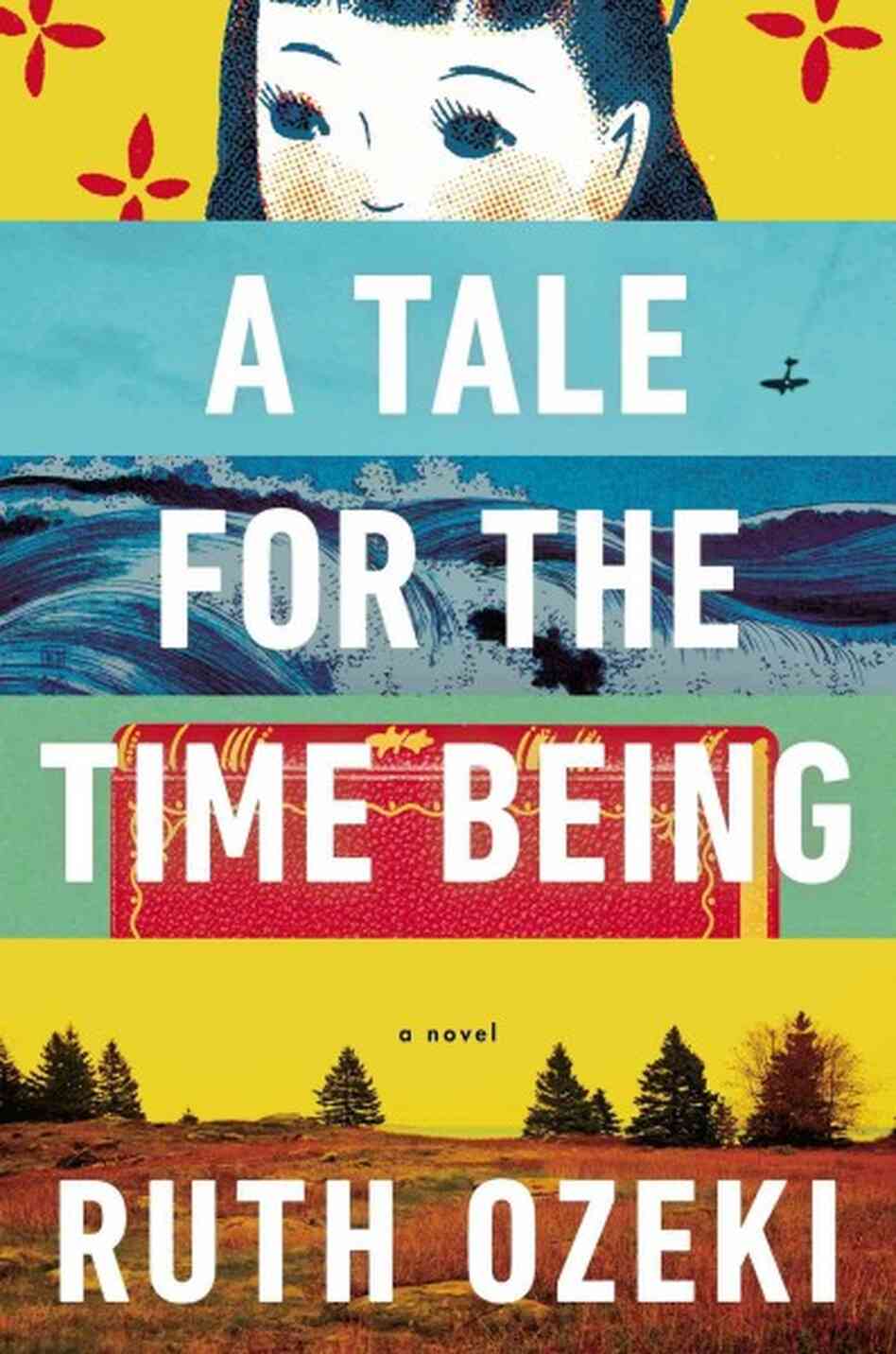
A Tale for the Time Being by Ruth Ozeki
Ruth Ozeki's A Tale for the Time Being is one of those books that kept popping up for me all over the internet.  All the reviews I saw were positive, so I decided that I wanted to read it even though I had only a very vague idea of what the book was about.  It recently came available from the library on digital download and I listened to it all last week on my commute.  Ozeki herself narrates the novel, and she is really good.

Both Jenny and Vasilly read and loved this book (if that isn't enough to induce you to read it, then I wash my hands of you), but like me, they struggled to describe the plot in a way that will make you run out to the store or library or internet and grab it immediately.  The story revolves around two women.  Nao Yasutani is a teenager who grew up in California and then moved back with her parents to Japan.  She struggles in school, is constantly bullied by her peers, and has a lot of difficulties at home, too, where she deals with a suicidal father.  She gets through her days with the help of her great-grandmother, a Buddhist nun who always knows just what to say and do.  Ruth is a middle-aged author who lives on a remote Canadian island.  One day, she finds Nao's diary washed up on the shore of the beach in a trash bag.  As she reads Nao's journal, she becomes obsessed with finding out more about Nao and helping the young girl through her difficult life.

See?  Reading the above summary does not make me want to read the book and I already read and loved it.  So perhaps it's best to go into this novel as I did, with just a vague idea of the plot and the knowledge that people who read the book REALLY REALLY loved it.

Nao Yasutani is one of the most charismatic and engaging narrators I have come across in a long time.  She struggles through so many horrible things but her voice is always so spot-on and real and perfect, I just fell in love with her.  I can completely understand why Ruth felt so invested in her story; I felt invested in it, too.

There is so much in this book besides Nao's scary life and Ruth's isolated one.  There is philosophical discussion, a lot of information about crows, a whole bunch of tear-jerking moments about the strong bonds between different family members (particularly between a girl and her father), how difficult it can be to deal with a crisis of conscience, and so much more.  Ozeki also does something similar to G. Willow Wilson in the way they approach time and how we control time, but I think Ozeki's method was easier for me to understand than the one Wilson used in Alif the Unseen.

There are so many lovely, beautiful messages in this book and they are not at all preachy, which is a small issue I had with the other book I read by Ozeki, My Year of Meats.  This one, I had no issues with.  The whole story is a delight and I was utterly enchanted.  The little twist of magical realism at the end was welcome, too.  I suppose some people may find it odd, but I thought it was perfect and it fit so well within the story.

Truly a wonderful book to help close out 2013.  Highly recommended.

Thursday, July 11, 2013

Welcome to the Psych Ward

The Devil in Silver
I first heard about Victor Lavalle during last year's A More Diverse Universe blog tour.  I'm not sure how I decided on The Devil in Silver as the first book by him that I would read.  I don't ever read horror novels, which is how this is marketed, and I also don't read many books about mental illness.  But somehow, this is the one I chose.

I would not describe The Devil in Silver as a horror novel, though there are many horrific things that happen.  It all begins when Pepper, a middle-aged man from Queens, gets into a fight with some plains-clothes police officers who don't want to deal with writing him up.  So instead, they take him to New Hyde Hospital and have him involuntarily checked into the psychiatric ward for a three-day period.  Pepper is greeted by Dorrie, a cheerful old woman who has lived in the hospital for years and years.  His roommate, Kofi (whom everyone calls Coffee), greets him by demanding quarters.  And everyone else he meets - from the orderlies to the nurses to the other patients - is just as quirky a character.

Pepper's stay at New Hyde lasts much longer than three days.  Through his eyes, we learn so much.  The way that sane people think that they are more human than the mentally ill, and how that can have devastating effects on treatment.  How corruption can rot a hospital that was created to do good.  How a person can lose his empathy slowly but surely without even realizing it, until one day he sees a patient struggling against physical restraints and is not bothered by it.  How people are overmedicated to keep them quiet, so that they have no idea what is happening to them and they become more isolated from those around them.

Friday, December 14, 2012

Musings: The Little Stranger

The Little Stranger
It's been a while since I read a Sarah Waters book, and I had a feeling that her writing style would translate brilliantly to audiobook format.  I hit the jackpot with the audio recording of her eerie Gothic novel The Little Stranger, which is part ghost story, part social commentary, part psychoanalysis and all-around ripping good story.

The narrator is Dr. Faraday, a rural surgeon in post-WWII England who becomes acquainted with the Ayers family of Hundreds Hall when called in to see the house servant, who complains of a violent stomach ailment.  We learn early on that Faraday has a low tolerance for nonsense, as he frankly (and accurately) tells the maid that she is making up her illness and that he cannot treat her for homesickness.

As Faraday begins to interact more and more with the residents of Hundreds Hall - the charming widow Mrs. Ayres; her damaged war veteran son, Roderick; and her plain but kind daughter, Caroline - readers learn of the shabby genteel manner in which the Ayres live.  There is no money to pay for the Hall's upkeep, and the pressure of finding a way to maintain it is wearing Roderick down.  After a freak accident occurs at a small party, the Ayres family begins to fall apart.  And there is Dr. Faraday to narrate their story, and his, to us while it happens.  And readers see in full horror the unraveling of a family and of a man intimately associated with that family.

Monday, December 3, 2012

Musings: Marbles

Marbles by Ellen Forney
Ellen Forney's graphic novel Marbles:  Mania, Depression, Michelangelo, and Me is one of those that instantly appealed to me.  I enjoy graphic novels, and for some reason, I really enjoy memoirs in the comic format (I don't particularly like memoirs in other formats).  I don't know much about mental illness, so I thought reading about it from the POV of someone who deals with it on a daily basis would be a good way for me to learn more.

And this book was a great learning experience, but not exactly in the way I expected.  In a way, I'm glad.  If I'd had a better idea of the author's lifestyle, I probably wouldn't have picked the book up.  But more on that later - I don't want it to dominate the review.

The book is about a bipolar woman struggling to be normal.  She is diagnosed with bipolar disorder right around the time she reaches age 30 and shares a very intimate story about her struggles with it.  Forney is an artist, and a lot of the medication prescribed for bipolar disorder can inhibit creativity.  Forney doesn't want to lose her edge or her inspiration, so she isn't sure that she wants to be medicated.  But at the same time, she hates the ups and downs of manic-depression and wants very much to get healthy.

Forney does a lot of research into artists that struggled with mental illness, pointing out that many of the world's great artists struggled with some sort of disease while working at their art.  Edvard Munch's The Scream is an iconic painting that could be a visual representation of a horrible hallucination.  Sylvia Plath's writing was heavily influenced by her stay in a mental hospital.  Etc., etc.  Forney wonders if she will lose her edge by getting better.

This is an intensely personal memoir, sometimes uncomfortably so.  Forney tells her story in simple, black and white drawings (though the art she shares from her personal journal is much more detailed and complex), but the events themselves are not at all simple.  Bipolar disorder has many, many symptoms.  For example, she shares a story about how she once flirted with a wall, partly as a joke and partly because she was just really turned on at the time.  She also shares socially awkward and inappropriate conversations that she has with complete strangers, only realizing later that she made people feel ill at ease.  Her highs through manic times and lows through the depressive times just exhaust her and wear her out, and she hates being so inconsistent all the time.  I didn't realize until this book just how imprecise the medication for bipolar disorder is.  There are so many different treatments, and people react to them in so many ways, and it's so much more an art than a science.  But for the patient, it can seem like a never-ending trip through Hell, never finding something that works.  Forney details all of this in a truly heart-felt memoir.

I mentioned before that if I had known more about the author's lifestyle, I may not have read this book.  Forney smokes a lot of pot.  As does her mother, who is a doctor.  Forney thinks it's really cool that she and her mom are both stoners.  Forney is also very open about her sexual encounters.  Generally, these are the types of books I avoid.  If that's also the case with you, I can see why you might give this one a miss.  But I found that learning more about Forney's journey was well worth a little bit of discomfort on my end, so I hope you stretch your boundaries a bit, too.

Note:  This review is based on an advance reader's copy.  I received a complimentary copy to review.

Monday, July 30, 2012

Musings: The Woman in White

I can't have been the only person to read this and think, "Clearly, Hartwright is in love with Marian and just doesn't realize it because she has a mustache."

RIGHT?

I mean, seriously, what does Laura have going for her besides an angelic countenance?  She's obviously not particularly bright, can't draw to save her life, has a pretty warped sense of priorities, suffers from a seriously weak immune system for no apparent reason, and signs away a hefty fortune.  But Marian.  The woman is amazing!  She is smart, brave, intrepid, well-formed, loyal, kind, and scrappy.  How cruel, Wilkie Collins, to make her some sort of monstrosity to look at to compensate for her overwhelming awesomeness.  What, a woman can't be smart, pretty, and brave?

So many things happened in this book!  And it was populated by so many well-drawn characters, all of whom had such distinct, individual voices (except for Laura, who had very little personality at all, but she was pretty and that's all that matters).  Want to know more?  Check out my review on the Project Gutenberg Project blog.

Monday, June 25, 2012

Musings: Ten Days in a Mad-House

 It's hard to resist a title like that, isn't it?!  I certainly couldn't.  I listened to an excellent Librivox recording of intrepid Victorian undercover female journalist Nellie Bly's book on her time spent at the Women's Lunatic Asylum on Blackwell's Island in New York City.  Wow.  It was really eye-opening.  And Bly didn't stop there - she went on to travel the world in just 72 days (take that, Jules Verne!) the next year, and soon settled down to marriage with a millionaire industrialist 40 years her senior.  Oh, and registered a few patents in her own name.  Ain't no thang.

The woman was fantastic!  And Ten Days in a Mad-House was a good read, too (not FUN, but wow).  I highly recommend it!

If you'd like to hear more of my detailed thoughts, they are at the Project Gutenberg Project blog.


This is just such a hilarious caption I couldn't resist.


Thursday, June 21, 2012

Musings: Al Capone Does My Shirts

Al Capone Does My Shirts
I am not sure when I first heard about Gennifer Choldenko's middle grade book Al Capone Does My Shirts.  I don't read much middle grade fiction, but the premise of this book really caught my attention.  Moose Flanagan is a 12-year-old boy growing up in the midst of the Great Depression.  His family has just moved to Alcatraz for his father's new job as electrician and prison guard.  They hope that the new job will give the family enough money to afford a new school for Moose's older sister, Natalie, who suffers from severe autism.  Maybe if Natalie gets into that school, Moose's mom will return to normal, too.

Al Capone Does My Shirts is a slim volume that deals with a lot of heavy issues.  I feel like when I was in middle school, books for young readers were written on one topic.  For instance, there would be a book about Moose's family moving to Alcatraz.  Or a different book about Moose's families money issues.  Or another about Moose dealing with his mom's depression.  And another about his sister.  But they wouldn't all be in a book together.  It's as though until recently, no one thought that kids could handle more than one difficult situation at once.  But now we all understand that kids' lives are complex, and books have evolved to acknowledge that complexity.  This is an excellent example of that evolution.

Friday, November 19, 2010

Review: The Outward Room

While I missed blogosphere's NYRB Classics week recently, I did manage to read an NYRB book this past week!  It is the first book I've read since August, so I was pretty thrilled to get through it.  It also was a very nice, quiet read, and I'm excited to tell you all about it!

The Outward Room by Millen Brand starts with a woman locked in a mental institution.  She has been there since her breakdown some years ago, after her beloved older brother's death.  But she is getting tired of the hospital and her life there and one day, she manages to escape.  She goes to New York, taking for herself the name Harriet Demuth (we never learn her real name), pawning her treasured ring and looking for a job.  But it's the Great Depression and no one is hiring.  Hungry and exhausted, Harriet is lucky enough to befriend John, a machine worker who takes her in and shows her true kindness.  The two learn to support and trust each other and discover the city during some of its darkest days.

Wednesday, January 27, 2010

Review: Keeping the Feast


Title:  Keeping the Feast

Author:  Paula Butturini

To be published by Riverhead Books in February 2010.

This review is based on an advanced reader's copy.  I received this book for free to review.


Summary:
Paula Butturini grew up in a very Italian family, where everyone came together at the end of the day to share a good meal and stories.  She held tight to this tradition through moves across the US and Europe, through a marriage and early divorce, through the shattering knowledge that her mother suffered from severe depression.

When Butturini met John Tagliabue- a reporter for the New York Times- in Rome, she was grateful to have finally found someone who seemed to truly understand her, someone with whom she could start her life.  They lived together reporting the fall of communism in Eastern Europe, and going through a great many troubles because of it.

Butturini was beaten and bruised by riot police only a few weeks before her wedding.  And only a short time after they were married, Tagliabue was shot and nearly killed by a bullet through his body.  While he recovered, slowly, from the bodily injuries, he was much slower to recover from the emotional toll.  Butturini soon realized that, just as her mother had, her husband too was suffering from severe and acute depression.  After yet another blow hits their family, Paula and John returned to Italy in an attempt to heal their scars, depending on their happy memories of meals and walks and blossoming love in Rome to get them through their trauma.

Friday, January 8, 2010

Review: The Yellow Wallpaper (Short Story)

The Yellow Wallpaper
Title:  The Yellow Wallpaper

Author:  Charlotte Perkins Gilman

First Published in 1899

Plot Summary:
A young family goes to a country home in a small American town for the summer.  The husband is a physician who hopes that being in the country will help his wife over her currently unhappy state.  The wife has just recently given birth to a son and is probably suffering from what we would today call postpartum depression.  She feels sad and tired often, and her physician husband's cure for this is to isolate her in the attic of their rented home.  The attic has barred windows, a bed nailed to the floor, and hideously yellow wallpaper.  As time moves on, we see the woman, who narrates the story, become more and more enthralled with the wallpaper- first she sees it as ugly, then she sees patterns and shapes in it and finally she sees that there is a woman trapped behind it, trying desperately to get out.  And she decides to help this poor woman.

After reading Wish Her Safe at Home late last year and loving it, I heard a lot about this short story, The Yellow Wallpaper.  It is very short- I read it in two "longest" DailyLit installments.  This is also the first e-story I've ever read.  I highly recommend clicking the link on the title above and reading the story!

In Wish Her Safe at Home, we also had a woman narrator who is slowly going insane, but in a completely different situation.  The narrator in that story chose to go insane, and live out the life she always wanted for herself.  In The Yellow Wallpaper, the narrator asks her husband multiple times to let her out and to allow her to socialize and write and enjoy her life, but he refuses, citing her health as his reason.  As the narrator says, her husband "is very careful and loving, and hardly lets me stir without special direction."  Thus, isolated as she is and suffering from what starts as a seemingly mild form of mental illness, the woman in The Yellow Wallpaper descends into insanity and no one even notices until it is too late.

Saturday, December 5, 2009

Review: Wish Her Safe at Home

Wish Her Safe at Home
Author:  Stephen Benatar

Favorite Line: 
There are things money can’t buy, things like fresh youth to replace the one you’ve hardly been aware of, things like lost opportunities which might conceivably have led to nothing, but which on the other hand might have led to fulfillment and serenity and new lives and passionate involvement… And human nature being what it is this is the version you’ll unquestionably believe.

This review is based on an advanced reader’s copy.

Plot Summary: 
Rachel Waring is a middle-aged, plain English woman stuck in a dead-end job in 1980.  She has never been in love, never been married, both her parents are dead and she has very few friends.  Thus, when she receives notice that she inherited her great-aunt’s beautiful old mansion in Bristol, Rachel is thrilled.  She visits the house, falls in love with it, notes that it has one of those famous blue plaques on it signifying it was lived in by a (minor and no longer remembered) member of the anti-slavery movement, and decides to move in, leaving her past behind her in London.

She plants a garden with the help of an attractive younger man, begins writing a biography of the 18th century (minor and no longer remembered) anti-slavery advocate and goes about being friendly and cheerful to everyone she comes across  As the story continues, readers have the sense that not all is quite right with Rachel.  She invents a new life- even a new past- for herself as she goes “quietly and genteelly crazy.”


Wednesday, December 2, 2009

Joint Musings: Fingersmith

Fingersmith
Title:  Fingersmith

Author:  Sarah Waters

# of Pages:  582

Publisher:  Riverhead

Plot Summary:
Susan is a petty thief in London, living what she thinks is an ideal life.  Until Gentleman comes to her and her adopted family with a proposition- to entice a naive country lady into marriage with Gentleman, throw her into a mental institution, and abscond with her fortune.
Maud is that country lady, but she is not naive.  She is tired of her life in the country, locked up in her uncle's home with no power or authority.  In Gentleman, she sees a way to escape.
But things, for both ladies, don't turn out quite as they expect, and this novel is full of twists and turns that will make your head whirl.
A short plot summary, but it's hard to summarize when there are so many potential spoilers!

The below review is done jointly between Kailana and I.  See the first half of our discussion on her blog here, and then come back here for the conclusion.  My thoughts are in green and hers are in black:

I was expecting a lesbian relationship because that is one of the common themes in Waters' books. I was surprised that it wasn't more of a major theme than it was, though. I thought it was tastefully done, though, and if it played more of a theme than I probably wouldn't have liked the book as well. I am not big on romance novels. I am looking forward to read more from Waters next year, actually. The two books by her that I don't own are all ready on my 'buy with Christmas money' list. I think I am reading one of them with Ana from things mean a lot, but I can't remember what at the moment! Anyways, I agree on it being natural and built on trust.

As to my favourite character, I am like you. I can't really say who I enjoyed. I thought that Maud and Susan both had redeeming characteristics, so I actually liked both of them. Maud and her reading appealed to me at first. Then, though, there was everything that happened afterwards that made me not so fond of the reading anymore. I don't really want to say a lot because it is a potential big spoiler. Really, I could gush on and on about the characters and their stories and everything that came to pass, but if others want to read this book without knowing everything that happens I guess I cannot say nearly anything that I would love to say!

Yes, I know exactly what you mean!  It's hard with a book that has so many twists and turns to review it without spoilers.  I agree with you on the romance aspect- I expected it to be a more prominent plot piece, but I think the book succeeded really well with it being pushed pretty far away from mainstage because we got to see the characters on their own, and get to know them individually, rather than as two halves of a whole couple.

I thought that Waters did well with the settings, too.  The old, decrepit country house that was so dark and gloomy, where Maud spent so much time trying to keep her mother's grave clean.  The way the Thames by the house was so thin and weak, whereas in London it was so wide and busy.  Seeing London as a frightening and dirty place that was kind of the end of the road for a lot of people.  And the idea now that someone living only about 40 miles from such a huge city but never having been there is so hard to fathom, but just again goes to show the level of isolation women felt.  And then the scenes in the institution were written so well, too, and just make a reader ache to read.  Just great writing style all around!  Do you agree?

Oh, yes, I felt like I was there! I think she is fantastic all around writer. Not only did I feel like I really got to know the characters, but I felt like I was there. Even now that it has been a couple days since I finished the book I can close my eyes and picture the story through her description. I have never seen anything that she mentioned myself, but I feel like I almost have now. She is the sort of author that does not waste a word, but at the same time she is not long-winded either. She has just the right balance. Plus, she throws in the twists and turns, so just when you are starting to feel 'safe' you have another moment to consider what just happened! Talking about the book gets me very excited. I have read a lot of really good books this year, but I was feeling like I was lacking in the 'wow' books. The type of books that you are very sad to see end and that you want to reread again because you miss it all ready. That was this book for me! Reading this book was an experience and I cannot wait to have another one! I am not going to let it be two years this time!

That's great!  I love "wow" factor books, too.  I will have to think back over everything I read for my year-end wrap-up post.  I think Waters will be on the list of "newly discovered but long-on-my-shelf" authors.  A great book- I can't really add to your description above, so I'll just say "hear, hear!"  Thanks for reviewing it with me- it's definitely the sort of book that is fun to discuss with someone else, so I'm glad we did this!

Well, she won't be alone on my 'wow' list. There have been a couple others, but judging the total read compared to how many there are it is not really a very large amount! This was fun! And, it is about time we read a book together. Now, we need another one...